BH-34T Mobile Column Lifts: Why Individual Wheel Loads Matter
Check the BH-34T four-column rating against individual wheel loads, tire fit and the approved vehicle arrangement before selecting a heavy-vehicle lifting system.
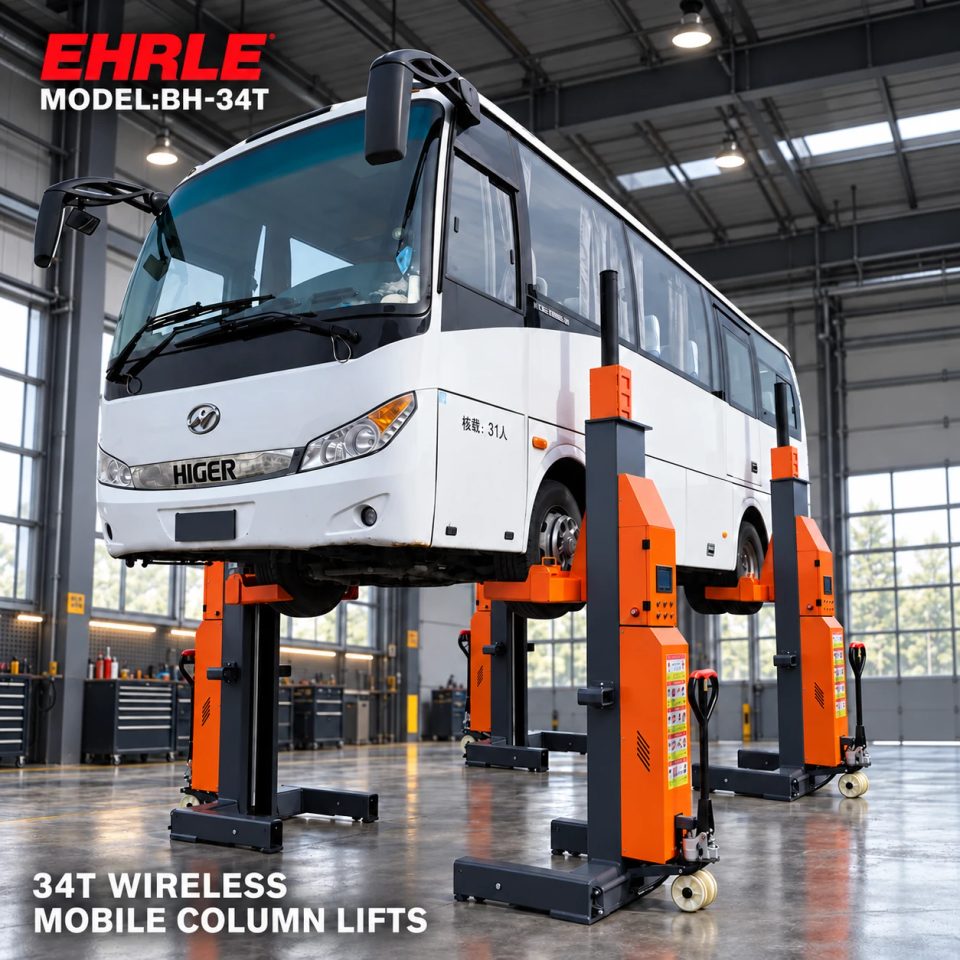
Check the combined rating and each individual support load
The EHRLE BH-34T standard set contains four wheel-engaging hydraulic columns. Each column is rated at 8,500 kg, and the four-column set has a combined rated capacity of 34,000 kg. The 34T designation is not a rating for one column.
Both limits matter when assessing a vehicle. Total vehicle weight below 34,000 kg does not establish that every supported wheel load is below 8,500 kg. Unequal loads can make an individual support position the limiting condition. Provide the actual wheel-load information and proposed support positions so the manufacturer can confirm the arrangement; do not assume vehicle weight divides equally among four columns.
Use the vehicle layout to define the column configuration
Six-column and eight-column arrangements are listed options, subject to an approved vehicle and control configuration. They are not automatic approval for every multi-axle vehicle. Axle positions, individual wheel loads and tire details need to be supplied with the enquiry.
Do not turn column count multiplied by the individual rating into an unconfirmed approved system rating. Request the documented capacity and operating configuration for the exact set being supplied. The quotation should identify the column count and approved vehicle arrangement, rather than relying on a generic “mobile column lift” description.
Tire diameter is a screening dimension, not complete fit approval
The current BH-34T record lists a tire-diameter range of 480–1,270 mm. That range is a useful initial check, but it does not publish every fork or tire-fit dimension needed to approve the support arrangement. Supply the actual tire specification and wheel configuration, then ask for the applicable fork-adjustment and compatibility information.
A vehicle scene illustration does not establish compatibility with every bus or truck of similar appearance. Use the exact vehicle data, support geometry and manufacturer documentation when preparing the equipment schedule.
Distinguish wheel-engaging support from wheel-free service
The BH-34T forks support the vehicle through its tires. The standard arrangement therefore does not provide wheel-free access. If the intended maintenance includes wheel removal, request a separate manufacturer-approved support and unloading procedure and the corresponding equipment scope.
Do not assume a raised vehicle can remain supported in the same way after removing a wheel. This buying guide does not specify support-transfer steps or stand ratings; those must come from the applicable documents and approved arrangement. Identify the intended tasks before ordering so any required additional equipment can be confirmed.
Plan the floor, overhead space and movement of unloaded columns
The listed maximum lifting height is 1,750 mm and each column weighs 760 kg. Neither figure establishes a universal floor requirement or recommended building clearance. Provide the proposed site layout and request the floor and clearance requirements for the approved configuration, including the vehicle envelope.
The transport wheels and trolley handle are for moving unloaded columns. Do not move loaded columns. Positioning, lifting and locking must follow the supplied instructions. “Mobile” describes the ability to reposition the unloaded equipment; it does not establish permission to move a raised vehicle or use any available floor.
Keep charging supply distinct from operating voltage
The BH-34T record lists rechargeable 24 V operation, AC 220 V charging and wireless communication. Operating voltage and charging supply describe different parts of the equipment specification. The current record does not publish battery endurance or a universal number of lifts per charge, so request those details for the supplied version if they affect workshop planning.
Wireless communication does not eliminate the need for an approved control arrangement and operating procedure. Ask for the configuration documents, charging-equipment scope and relevant operating checks for the exact set.
Prepare a vehicle-specific quotation brief
Send EHRLE:
1. Vehicle models, intended operating weights and individual wheel-load information.
2. Axle positions, tire specifications and wheel configurations.
3. The intended support arrangement and required column count.
4. Service tasks, especially any work requiring wheel removal.
5. A site layout showing the proposed floor area and overhead obstructions.
6. Charging provision, delivery destination and document requirements.
Request the approved arrangement, individual and combined load limits, tire/fork compatibility information, floor requirements, operating instructions and an itemized equipment list. Ask for applicable model-specific certification documents where required. For lighter vehicles considered for an EC600 two-post service bay, use its separate 6,000 kg rating, vehicle lifting-point requirements and installation documents; it is a different support system, not an interchangeable substitute for BH-34T columns.
FAQ: Does a vehicle below 34 tonnes automatically fit the four-column set?
No. Every individual support load must stay within its column limit, and the tire fit, support arrangement and site conditions require confirmation. Total weight alone cannot establish suitability.
FAQ: Can I assume six or eight columns have an approved capacity based only on multiplication?
No. Those are listed optional arrangements. Obtain the manufacturer-approved capacity and vehicle/control configuration for the exact supplied set.
FAQ: Can I remove wheels while the vehicle is supported by the forks?
The standard wheel-engaging arrangement supports the vehicle through its tires. Wheel removal requires separate approved support equipment and a manufacturer-approved unloading procedure.
Sources and image notes
This guide uses the EHRLE BH-34T product record checked on 10 October 2026. The related product pages provide the underlying specifications, including the separate EC600 reference. The cover is a product scene illustration, not evidence of a customer installation or approval for the pictured vehicle. Confirm actual load distribution, supplied equipment and permitted operation in the model-specific documents.