BH-34T Tire Fit: Check Diameter, Width and Fork Engagement Before Ordering
Use the BH-34T 480–1,270 mm tire-diameter range as a starting screen, then confirm tire width, wheel geometry, fork dimensions and individual support loads.
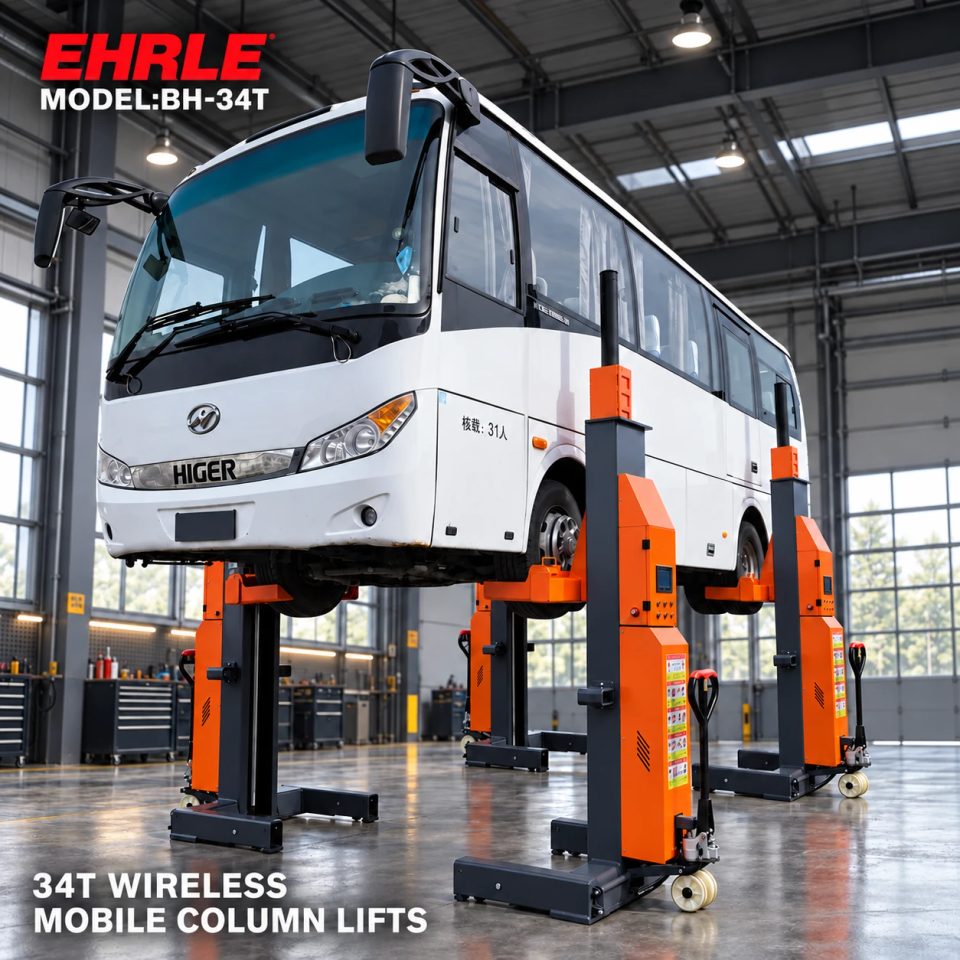
Use tire diameter as a screening value, not a complete approval
The EHRLE BH-34T record lists adjustable wheel forks for a tire-diameter range of 480–1,270 mm. It also explicitly requires tire width, wheel geometry and correct fork engagement to form part of vehicle matching. A tire within the diameter range therefore still needs a configuration-specific review.
For a fleet enquiry, identify the actual wheel and tire arrangement at every intended support position. This guide explains the evidence to request before purchase. It does not prescribe fork spacing, contact positions or a lifting procedure.
Keep diameter, width and wheel load separately labelled
The listed 480–1,270 mm range describes tire diameter, not tire width or rim diameter. The standard BH-34T set contains four columns rated at 8,500 kg each, with 34,000 kg combined capacity. Those load figures do not establish the fork geometry required for a particular tire.
Send the tire identification and relevant measured dimensions, with the measurement method stated, alongside the individual support loads. Ask the supplier what additional information is needed for the supplied forks. Do not replace missing wheel dimensions with total vehicle mass or assume the set rating means every support position carries the same load.
Request the actual fork interface and usable adjustment range
The current product record does not supply a verified numerical tire-width range, fork spacing, fork contact length or engagement allowance. Obtain the applicable drawing and operating instructions for the quoted fork assembly. Ask the supplier to identify the permitted wheel/tire arrangement and the conditions for engagement.
Adjustable is not a universal-fit claim. A photograph showing a bus on columns does not establish the fit of a different wheel, tire or body arrangement. If the required dimensions are absent, retain the vehicle as unverified until the supplier completes the assessment.
Flag dual wheels and unusual configurations explicitly
Where the fleet includes dual wheels or another unusual wheel arrangement, identify it in the enquiry rather than leaving the supplier to infer it from a vehicle category. Provide the available wheel/tire dimensions, axle positions and accessible photographs needed for review.
The current BH-34T record does not establish blanket approval for every dual-wheel arrangement or an additional adapter package. Ask whether the actual configuration is supported and request its specific equipment scope and instructions. Do not assume an adapter, wider fork or different column placement is permitted without confirmation.
A runway lift poses a different tire-support question
The H4-9A lists 500 mm runway width and the H4-12A lists 650 mm, with respective main ratings of 4,000 and 6,000 kg. Their tire support is assessed against the runway layout and permitted vehicle positions. BH-34T instead needs the wheel-to-fork interface reviewed.
These are different equipment roles and capacities, not interchangeable choices for the same heavy vehicle. A successful runway tire-placement review does not approve a wheel for BH-34T forks, and a BH-34T diameter-range match does not establish H4 fit. Compare the support interfaces using each model’s own drawing.
Do not confuse wheel engagement with wheels-free access
BH-34T supports the vehicle through its tires. Its record requires a separate manufacturer-approved support and unloading procedure for wheel-removal work. A confirmed tire/fork match for the standard arrangement does not itself approve that later task.
Likewise, six- and eight-column options require an approved vehicle and control configuration. Adding columns does not fill a missing fork-fit assessment. State the actual service tasks and proposed column arrangement so the supplier can identify the scope of the compatibility conclusion.
A fleet schedule that makes the fit decision reviewable
Prepare one entry for each relevant vehicle/wheel arrangement:
1. Vehicle identity, axle positions and intended support locations.
2. Tire identification, outside diameter and width information, clearly labelled.
3. Wheel configuration, including dual wheels or other unusual features.
4. Relevant wheel/support loads for the intended service condition.
5. Accessible photos or drawings showing the interface and nearby geometry.
Request the quoted fork identification, dimensioned interface drawing, permitted adjustment/engagement conditions and written vehicle-configuration review. Keep any missing dimensions or unsupported arrangement visible in the quotation. Have qualified personnel confirm floor suitability and installation/operating conditions using the exact equipment documents.
Send EHRLE this fleet schedule to review BH-34T suitability. The useful result is a confirmed wheel/fork and load match for the stated configuration, rather than a promise based only on diameter or 34T combined capacity.
FAQ: Is a 1,000 mm tire diameter enough to approve BH-34T use?
It is within the published diameter range, but does not complete approval. Tire width, wheel geometry, fork engagement, support loads and the selected configuration must also be assessed.
FAQ: Can I read fork spacing from the product scene?
No. The scene is not a scaled interface drawing. Obtain the actual assembly dimensions, adjustment range and engagement instructions from the supplier.
FAQ: Does the record approve all truck and bus dual wheels?
No universal dual-wheel approval is established. Identify the exact arrangement and request a supplier assessment with the relevant dimensions and documents.
Sources and image notes
This guide uses published, enabled and verified EHRLE BH-34T and H4-9A/H4-12A records checked on 24 October 2026. Related pages are linked below. It fills the wheel-to-fork geometry gap beyond earlier articles about individual wheel loads, floor approval and wheel-removal support.
The cover and gallery are product scene illustrations, not scaled support drawings, customer installation photographs or proof of approval for the pictured vehicle. They establish no universal tire-width range, adapter inclusion or fork-setting dimensions.
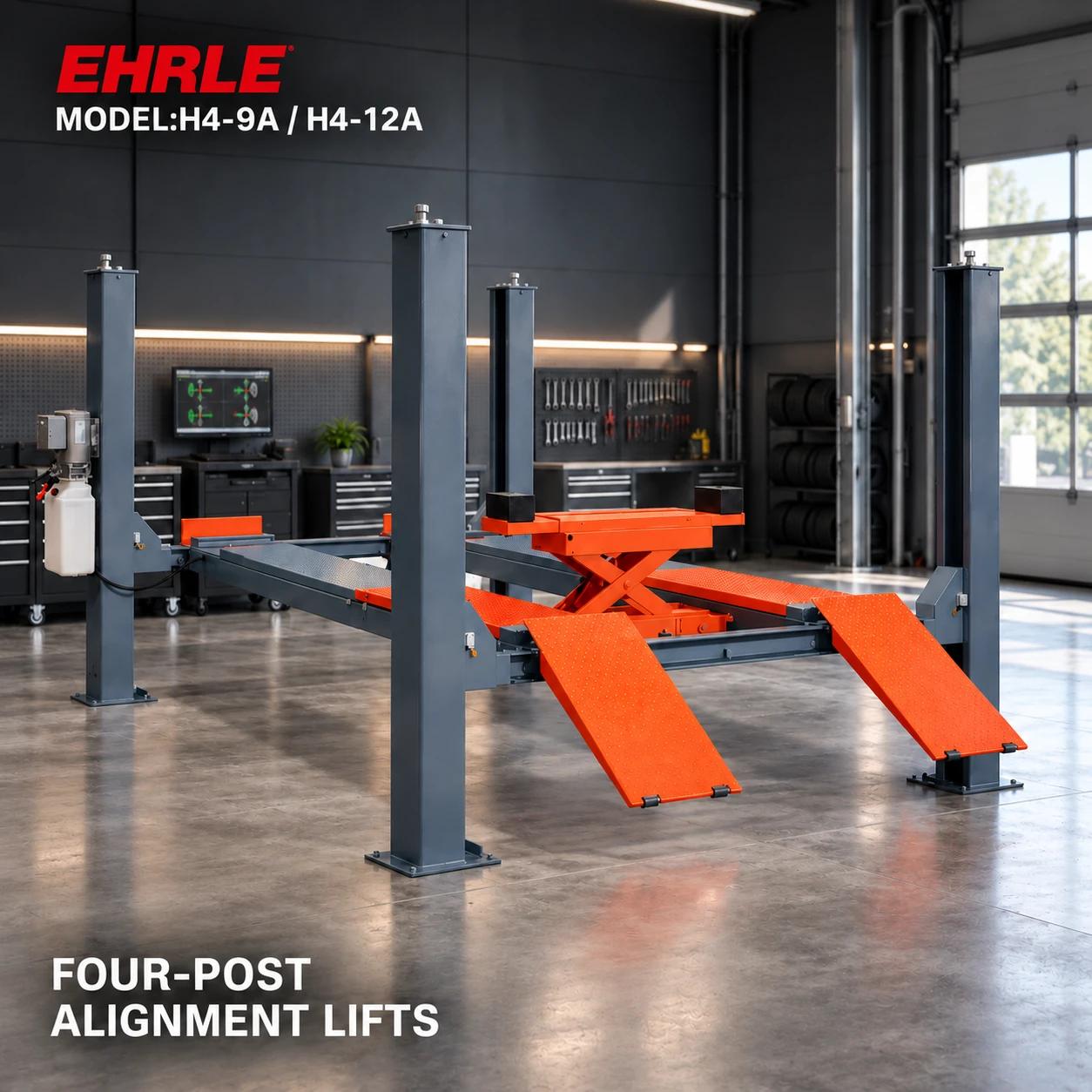
Product scene illustration. H4 runway widths and vehicle-position conditions cannot be substituted for BH-34T wheel-to-fork requirements.