Can a Car Lift Be Lowered During a Power Cut?
It depends on the exact lift and its authorized recovery procedure: a manual release label alone is not proof. For parking operators and repair-shop buyers, BH88 and EC500 examples explain what to settle before relying on vehicle recovery during an outage.
Key takeaways
• Manual lock release does not establish power-free vehicle recovery.
• Identify whether the complete lowering process needs electrical power, air or other equipment.
• A parking-space retrieval requirement differs from a repair-bay downtime requirement.
• Agree the authorized response, responsible people and return-to-service checks before purchase.
1. A manual release label describes one function, not the whole descent
The word manual can describe how a lock is released without describing every action needed to lower the vehicle. Load holding, lock release, controlled descent and the power needed for those actions are separate questions.
BendPak’s general safety guide describes lock designs that require a lifting movement before release. This illustrates why a release handle alone cannot prove that a vehicle can be recovered without power. It is not a description of the EC500 or BH88 mechanism, and the procedure must not be transferred to either model.
Ask one precise purchasing question: can this exact supplied lift, with a vehicle in the relevant supported position, be lowered during a facility power outage under an authorized procedure? A yes answer should identify the conditions and responsible personnel, rather than rely on a control label.
2. BH88 and EC500 publish release details, but no outage-recovery guarantee
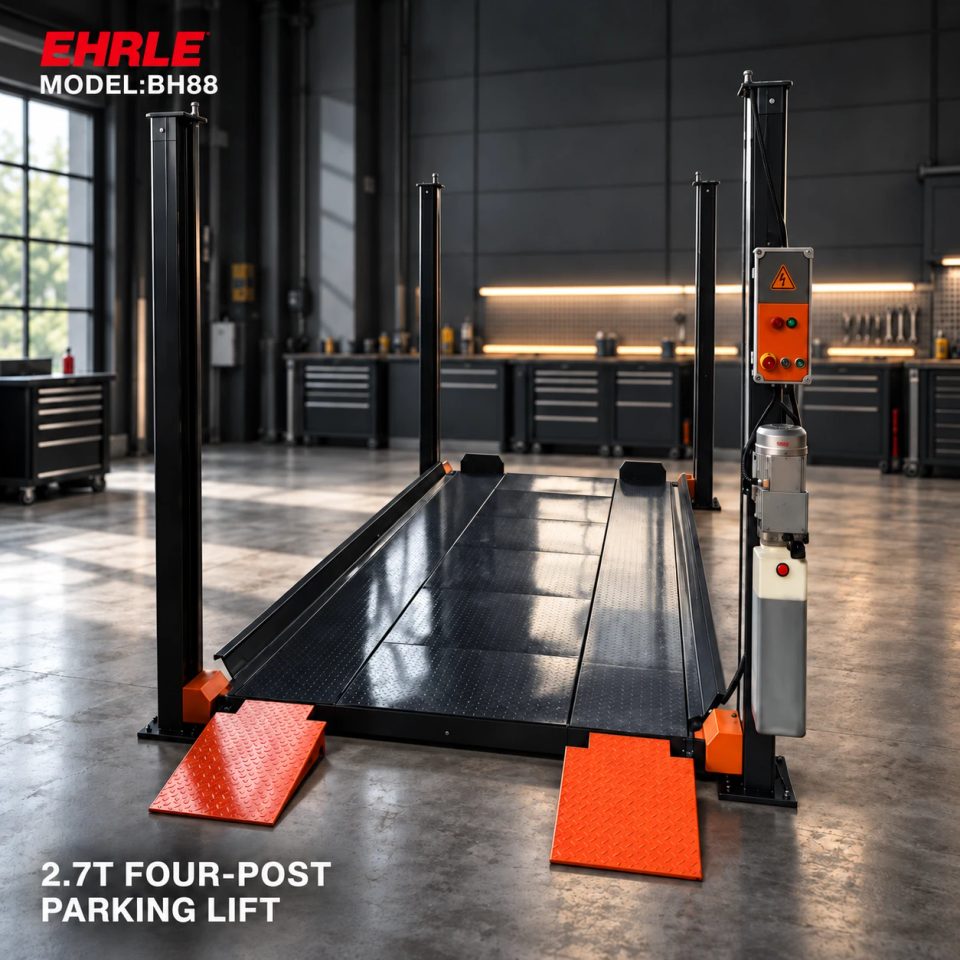
BH88 is a four-post hydraulic parking lift rated at 2,700 kg. Its current record lists manual release, a 2.2 kW motor, a choice of 220 V or 380 V input and 24 V control output. The approximately 40-second lowering time describes a listed operating time; it does not establish emergency recovery time.
EC500 is a 5,000 kg overhead hydraulic two-post service lift. The listed configuration includes single-side manual lock release, automatic arm locking, a 2.2 kW motor and a specified 110 V, 220 V or 380 V supply option. Arm restraint and lock release are different functions; neither label establishes operation during an outage.
Neither current product record supplies a verified power-failure lowering procedure or identifies a backup-power package. These are open specification items, not reasons to claim either that recovery is available or that it is impossible. The supplied model instructions must settle them.
3. Separate loss of electricity from an equipment fault
A facility power cut and a lift that will not lower despite an available supply are different conditions. A recovery method intended for one cannot automatically be used for the other. The purchasing review should distinguish a supply interruption from a control, hydraulic or mechanical fault.
CCOHS notes that hydraulic oil can remain pressurized after a system is shut down and reserves lift repairs for appropriately trained service personnel. Turning power off therefore does not make a valve, hose or loaded mechanism safe to alter.
Specify what the operator is permitted to do, what requires a service technician and who can authorize return to normal use. This article provides no valve adjustment, lock bypass, pressure-release or emergency-lowering sequence.
4. Translate an outage into the workshop’s actual access problem
For a hypothetical BH88 parking installation, the business requirement may be access to a stored vehicle at a particular time. The buying brief should explain how long access can be unavailable and ask for the documented retrieval conditions. The lift’s normal lowering time does not answer that availability question.
For a hypothetical EC500 repair bay, an outage may interrupt a job with a vehicle raised and components already removed. Restored power alone does not establish that the vehicle is ready to move: its current support and service condition also matter. The recovery plan needs to account for that state.
Use these scenarios to set operating expectations and contingency arrangements before ordering. Do not promise a customer a retrieval or job-completion deadline on the basis of an unverified emergency feature.
5. Size backup power only after the complete requirement is known
A 2.2 kW motor label is not a complete generator or UPS specification. Motor starting requirements, the ordered voltage, phase, frequency, controls and the manufacturer’s permitted supply arrangement all belong in the review by a qualified electrical professional.
Likewise, BH88’s 24 V control output does not establish a battery, charging system or ability to move the loaded lift without mains power. A control-system voltage and an energy source are different specifications.
If backup power is proposed, have the lift supplier and electrical professional establish compatibility for the exact equipment. Keep any required auxiliary supply or recovery equipment in the order scope. No generator size or electrical connection method is established here.
6. Make the recovery plan part of handover
The useful deliverable is a model-specific plan that the intended staff can follow, with clear limits on operator and service-technician actions. ALI’s safe-use guidance bases operator training on the lift manufacturer’s instructions and warnings. A verbal claim that a lift is easy to lower is not an equivalent handover.
Ask for the applicable instructions and a training scope that addresses loss of supply, the limits of any recovery function, required assistance and checks before reuse. Any demonstration must follow the manufacturer’s approved commissioning process; do not stage an improvised loaded power-failure test.
Your pre-order outage checklist
Confirm these five items in the purchase brief:
1. Exact lift model, electrical version and intended parking or service use.
2. Which supported vehicle states are covered by the documented outage response.
3. Any required power, air, tools or optional recovery equipment, with supplied scope identified.
4. Authorized operator actions, service support and return-to-service responsibilities.
5. Training and contingency arrangements for periods when recovery is unavailable.
Send EHRLE your proposed BH88 parking or EC500 service application, available electrical supply and access requirements. Resolve the recovery provision alongside the normal lift specification before accepting a power-independent lowering claim.
Frequently asked questions
Does manual release mean the car can always be lowered with no electricity?
No. It describes a release function. The complete procedure and its power requirements must be established for the exact supplied lift and vehicle state.
Does BH88’s 24 V output mean it includes battery backup?
No battery-backup provision is established by that control-output specification. Confirm any separate backup system explicitly.
Can a generator be selected from the 2.2 kW motor rating alone?
No. The actual electrical version, starting requirements and permitted supply arrangement also need professional review.
Can the normal BH88 lowering time be used as an outage-recovery promise?
No. The approximately 40-second figure is a listed lowering time, not a verified emergency retrieval time.
Sources and image notes
Published, enabled and verified EHRLE BH88 and EC500 records were checked on 31 October 2026; related product pages are linked below. General primary references: BendPak, Car Lift Safety Features, at bendpak.com; CCOHS, Garages — Hydraulic Lifts — General Information, at ccohs.ca; Automotive Lift Institute, How to Safely Use a Car Lift or Truck Lift, at autolift.org. These references explain why recovery needs model-specific review; they do not establish EHRLE emergency functions or certification.
Cover and gallery are product scene illustrations, not verified customer installations or outage-recovery demonstrations. Pictured controls do not establish internal functions, backup equipment or supplied accessories. The parking and repair scenarios are hypothetical.
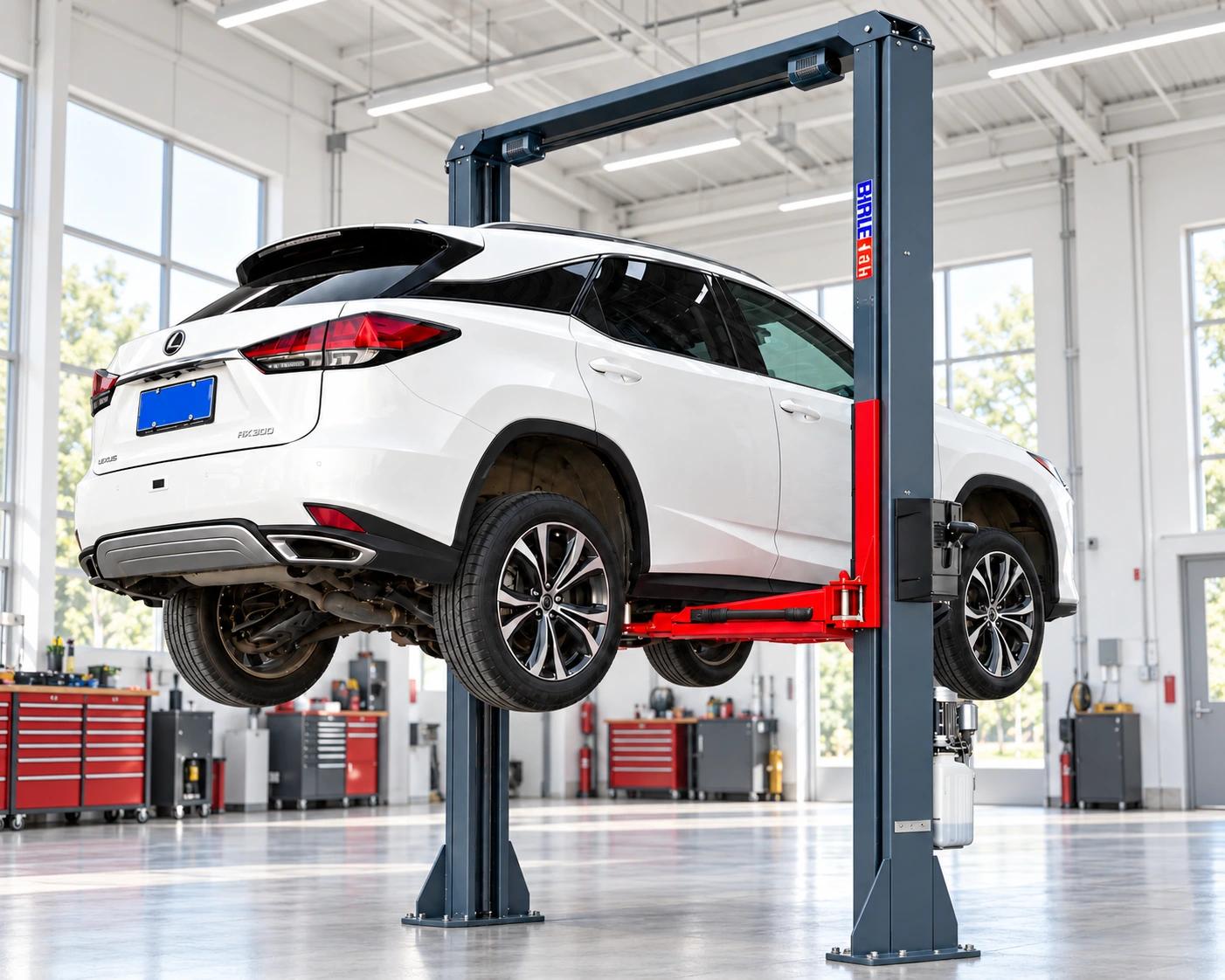
Product illustration. Single-side manual lock release does not establish an authorized power-failure lowering procedure.