Buying a CE-Marked Vehicle Lift? Check These 5 Document Matches
Check that the manufacturer, model, configuration and document scope all match the lift you are ordering. This five-part guide helps importers and distributors review the evidence behind a CE-marking claim.
Key takeaways
• Match the documents to the manufacturer, exact model and ordered configuration.
• A declaration, a test/type-examination document and a quality-system certificate answer different questions.
• A model name or CE graphic on a product page is not a completed shipment-document review.
• Resolve mismatches before relying on the document pack for your purchase.
1. Match the responsible manufacturer to the equipment
Start with the legal manufacturer identity, not just the sales brand. Compare the name and address on the declaration, equipment identification and relevant supporting documents. If the supplier, brand owner and manufacturer differ, ask for an explanation of those roles and a traceable connection to the equipment being ordered.
The European Commission’s manufacturer guidance identifies conformity assessment, technical documentation, the declaration and marking as parts of the manufacturer’s responsibilities. That is why a distributor’s logo alone cannot identify whose declaration covers a machine.
A difference in names is a question to resolve, not automatic proof that a document is invalid. Record the explanation and supporting evidence rather than silently treating the names as interchangeable.
2. Match the exact model instead of a similar-looking lift
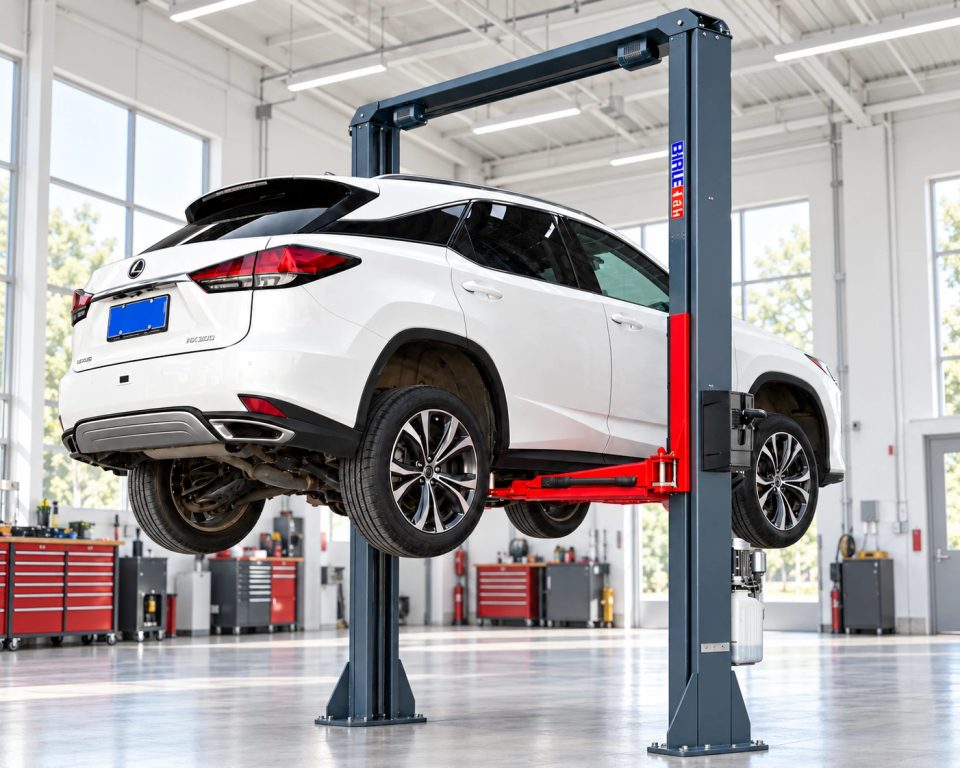
EC500 is a 5,000 kg overhead two-post hydraulic lift. BH-900 is a 900 kg motorcycle table with a front wheel chock and ramp. These are distinct product identities; a document referring to a two-post lift does not, on that description alone, establish coverage of a motorcycle table.
Your Europe’s declaration guidance includes product identification such as model, type or serial identification among the information to check. Read any model schedule or annex as well as the first page. Resolve spelling, suffix or model-family differences through the issuing documentation rather than guessing that similar names mean the same scope.
A photograph may help identify what was offered, but it cannot extend a document’s model list.
3. Match the ordered configuration to the documented version
A model code is only the beginning of configuration control. EC500 lists a 2.2 kW motor and 110 V, 220 V or 380 V supply choices; the order still needs one specified voltage, phase and frequency. BH-900 lists 220 V or 380 V supply choices for its narrow motorcycle-table version.
Keep those choices in the equipment schedule and ask how the supplied variant is covered by the applicable documentation. Do not assume a document for one electrical arrangement covers every motor, controller or accessory option. Equally, do not invent a rule that every option necessarily needs a separate certificate: establish the actual documented scope.
BH-900’s record expressly separates a widened 1,300 kg tricycle version from the listed 900 kg motorcycle table. That is a concrete reason to keep the quoted version and its documents aligned.
4. Match the document’s purpose to the claim being made
A signed declaration, a test report, a type-examination document and an ISO 9001 quality-management certificate are not interchangeable labels. First identify what the document actually addresses; then assess whether it supports the particular claim in the quotation.
For example, a document whose stated scope is a factory quality-management system does not by itself establish product-specific conformity for every lift made there. A component report also needs a clear relationship to the supplied complete machine before it can support a wider claim.
Check the holder, document number, issue/revision details and full scope. Where independent assessment is claimed, verify the issuing organisation and its applicable role through official information, including the Commission’s notified-body directory where relevant. This guide does not determine which assessment route applies to a particular shipment.
5. Match the current document pack to the delivered machine
Make the document review traceable to the actual order. Connect the equipment schedule, machine identification, applicable declaration, manual revision and supporting references. Check any dates or validity conditions that the documents themselves state, and clarify whether later changes affect the reviewed scope.
A practical example: if a quotation changes from the BH-900 narrow table to a different platform/capacity version, reopen the identity and scope review. Do not retain the old document conclusion simply because the commercial project name stayed the same.
The applicable product rules and destination requirements must be checked for the actual equipment and market. A catalogue entry is neither a legal assessment nor a guarantee of customs acceptance. Installation and vehicle-fit approval remain separate tasks.
Your pre-order document matching checklist
Record these five matches in the purchase file:
1. Manufacturer identity and its relationship to the sales brand/supplier.
2. Exact model/type, identification and any referenced annex.
3. Ordered electrical, platform, control and accessory configuration.
4. Each document’s holder, purpose, scope and verification reference.
5. Current revisions, stated validity conditions and connection to the delivered equipment.
Mark each item matched, awaiting clarification or outside the stated scope. Keep unresolved issues visible before accepting a conformity claim. Contact EHRLE with the selected model, destination and configuration to request the relevant document pack for review. EC500 and BH-900 are used here as identification examples, not as a blanket certification conclusion.
Frequently asked questions
Does a CE logo on an image prove that my ordered lift is covered?
No. It does not identify the full document scope, responsible manufacturer or exact supplied configuration. Review those items together.
Can a certificate for one lift cover another similar-looking model?
Only the actual document scope and applicable supporting evidence can establish coverage. Appearance or a shared brand is insufficient.
Does ISO 9001 replace the product conformity documents?
A quality-system scope is different from the supplied machine’s product-specific conformity evidence. Keep the purposes separate.
Is this article confirming certification for EC500 or BH-900?
No. It explains a purchasing review using their verified product identities. A shipment-specific conclusion requires the actual documents, configuration and applicable requirements.
Sources and image notes
Product identities and configuration examples use published, enabled and verified EHRLE EC500 and BH-900 records checked on 28 October 2026. Related product pages are linked below. General primary references consulted the same day: European Commission, Manufacturers, at single-market-economy.ec.europa.eu; Your Europe, Signing an EU declaration of conformity, at europa.eu. These support the manufacturer-role and document-identification discussion, not a certification conclusion for either EHRLE product.
The cover and gallery are product scene illustrations, not conformity inspections or verified customer installations. Logos or markings in the images do not establish document scope or approval of the pictured vehicle support.
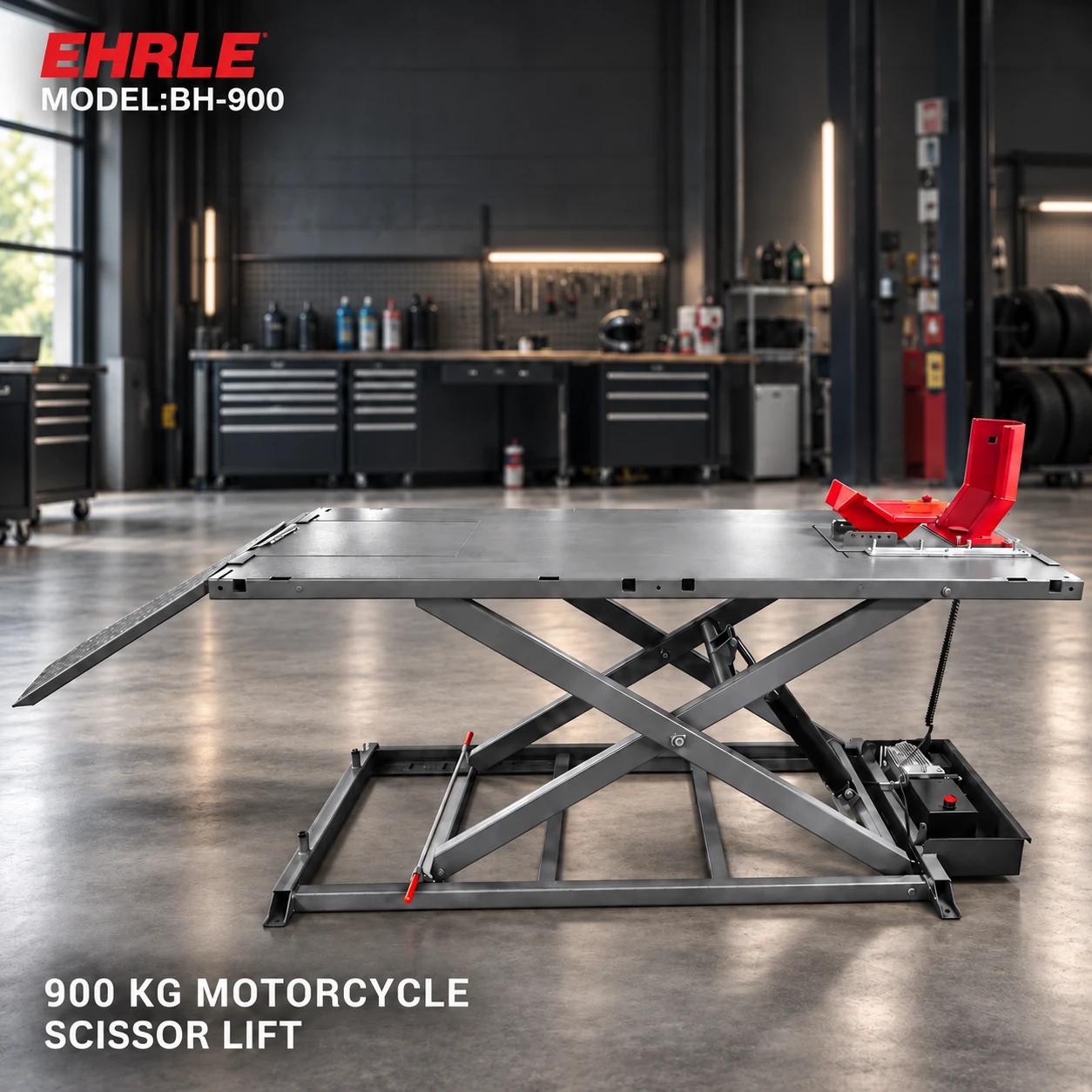
Product scene illustration. The listed motorcycle table is distinct from the widened 1,300 kg tricycle version; this image establishes no conformity-document scope.