EC500 vs EC600: Choosing a 5T or 6T Two-Post Lift for Your Workshop
Compare rated capacity, overall height, access dimensions and electrical options to choose between EHRLE EC500 and EC600 two-post lifts.
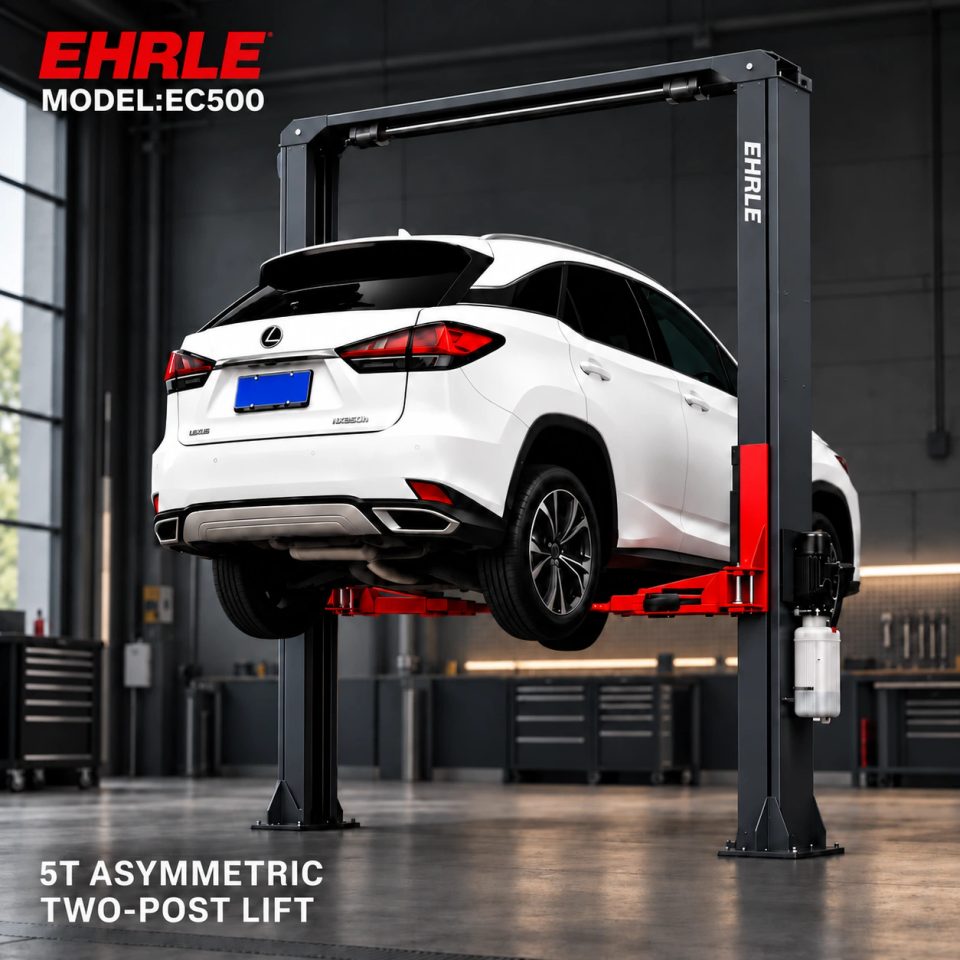
Start with the vehicle range and the available bay
The EC500 is rated at 5,000 kg and the EC600 at 6,000 kg. Both list a maximum lifting height of 1,800 mm and 2,840 mm clear spacing between the posts. The EC600 therefore adds rated load capacity, but the published figures do not indicate a higher lifting position or a wider clear opening.
Choose around the vehicles you actually service and the workshop drawing. A larger capacity figure alone does not confirm arm reach, lifting-point access or acceptable load distribution for a particular vehicle. These must be checked for the ordered model and configuration.
Compare equipment height separately from lifting height
The EC500 lists 3,720 mm overall height; the EC600 lists 4,500 mm. That is a 780 mm difference in the height of the equipment, while both list 1,800 mm maximum lifting height. These two measurements answer different questions: one describes the lift structure, and the other describes its published lifting range.
Do not use either overall height as a minimum ceiling-height recommendation. Supply the workshop ceiling dimensions and locations of overhead services, and ask for a model-specific drawing that accounts for the raised vehicle. If a bay cannot accommodate the selected configuration, a higher load rating does not resolve that limitation.
Keep overall width, post spacing and drive-through width distinct
The EC500 lists 3,500 mm overall width and the EC600 lists 3,550 mm. Both list 2,840 mm clear spacing between posts. The EC500 also lists a separate 2,500 mm drive-through width. The current EC600 information does not give a separate drive-through measurement, so do not transfer the EC500 value to it.
These dimensions describe different measuring positions. Neither overall width nor post spacing by itself defines a complete working bay. Vehicle-door movement, access around the equipment and the positioning of other workshop equipment must be reviewed on the actual layout. Ask the supplier to label each relevant width on the installation drawing.
Check pickup access and arm geometry for each vehicle
The EC500 specifies 45-degree asymmetric columns and a 90 mm minimum lifting height. Its published information does not make that minimum-height figure a guarantee of compatibility with every low vehicle. Approved lifting points, pad access, arm reach, side skirts and underfloor components still require assessment.
The EC600 is described as an asymmetric two-post hydraulic lift, but the current specification does not publish an arm-reach dimension or a minimum pickup height. Do not assume it shares the EC500 values. For a mixed fleet, provide representative vehicle details and ask for the arm-range drawing and applicable adapter information before ordering. The same approach applies to vans, pickups and electric vehicles: the vehicle category is a starting point for review, not proof of fit.
Specify one electrical configuration in the quotation
The EC500 lists a 2.2 kW motor and 110 V, 220 V or 380 V supply choices. The EC600 lists 2.2 or 3.0 kW motor choices and configuration-dependent 110 V, 220 V, 380 V, 415 V or 440 V supplies, with 50/60 Hz options.
These are ordering choices, not a statement that one supplied machine accepts every listed voltage. Confirm the destination supply voltage, phase and frequency, then have the supplier identify the matching motor and power-unit configuration in the quotation. For the EC500, phase and frequency also need explicit confirmation; the voltage list alone does not establish them.
A practical shortlist for your workshop
Consider the EC500 where the verified vehicle requirements fit its 5,000 kg rating, pickup arrangement and installation envelope. Consider the EC600 when the required rated capacity exceeds the EC500 rating but remains within the EC600 rating, provided the vehicle support geometry and taller installation envelope are also suitable.
If both pass those checks, compare the exact electrical version, supplied accessories, model-specific documents and working access. Do not select solely by the higher tonnage or assume the EC600 will lift a vehicle higher. Installation approval must follow the applicable manufacturer documentation and a qualified assessment of the site.
What to send before requesting a final quotation
Prepare the following information for EHRLE:
1. Representative vehicle models, operating weights, load distribution and approved lifting-point information.
2. Bay dimensions, ceiling height, overhead obstructions and planned vehicle approach.
3. Available voltage, phase and frequency.
4. Intended service tasks and any required adapters.
5. Delivery destination and the documents required for your market.
Request the exact model drawing, arm reach and pickup details, installation manual, foundation and anchor requirements, electrical configuration and itemized accessories. Have the installer check the actual floor and site against those documents; this comparison does not prescribe concrete or anchor values. If certification is required, request documents covering the supplied model and configuration rather than relying on a general brand claim.
FAQ: Does the EC600 lift higher than the EC500?
No difference is listed in maximum lifting height: both are specified at 1,800 mm. The EC600 has a higher rated capacity and a taller overall structure.
FAQ: Does 6,000 kg capacity guarantee that a particular van will fit?
No. Its weight, load distribution, approved lifting points, arm reach and access dimensions must also suit the selected lift. Request confirmation for the actual vehicle and ordered configuration.
FAQ: Can I use the EC500 drive-through width when planning an EC600 bay?
No. The current EC600 specification lists clear post spacing and overall width, but no separate drive-through width. Obtain that dimension from the EC600 drawing.
Image and specification notes
The cover and accompanying EC600 image are product scene illustrations, not evidence of a customer installation or guaranteed vehicle compatibility. Specifications in this comparison are drawn from the current EHRLE EC500 and EC600 product records checked on 6 October 2026. Confirm the final supplied configuration in the quotation. Use the related product pages below to review each model, or send your bay and vehicle details through the enquiry link.
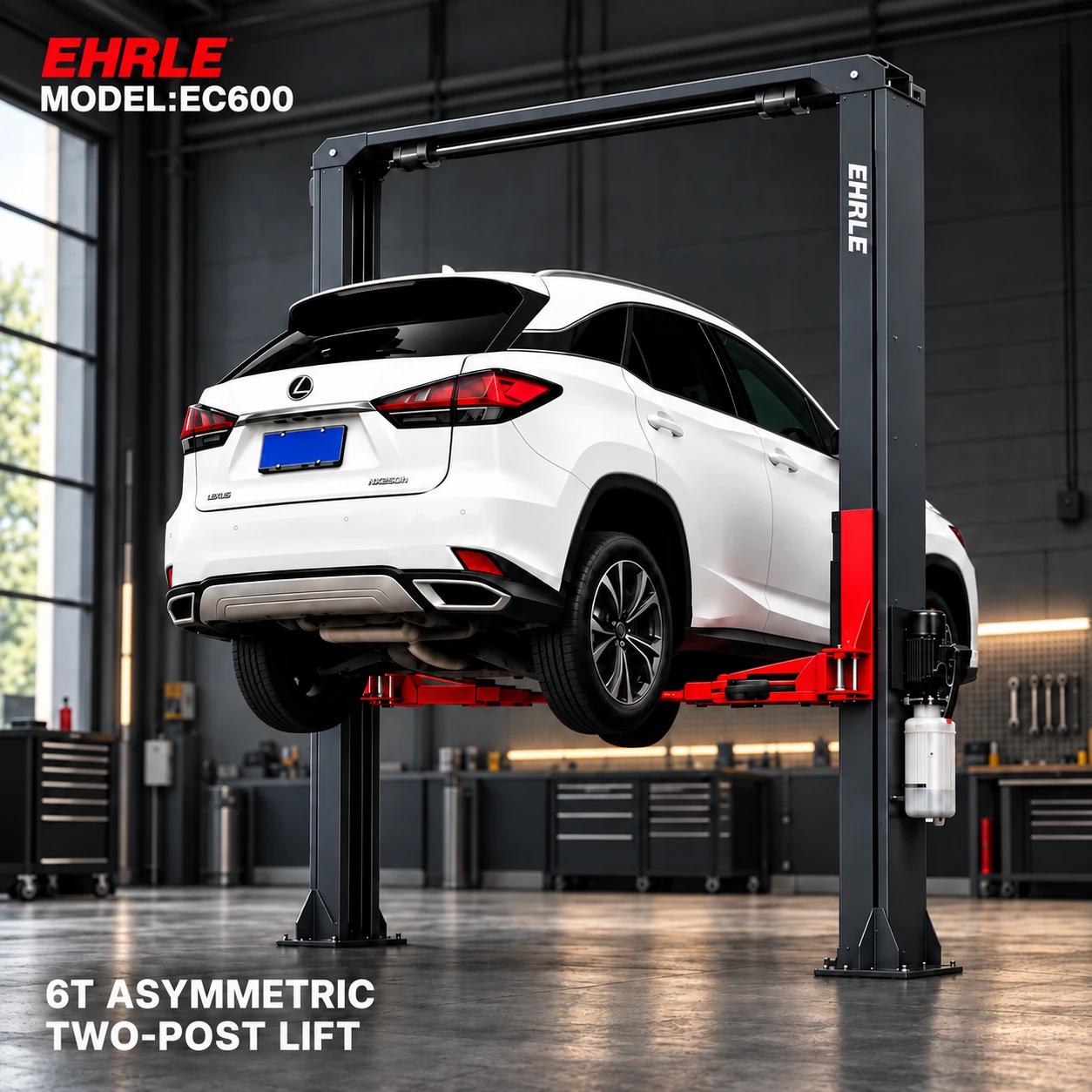
Product scene illustration. The published overall height is 4,500 mm; confirm actual vehicle compatibility and the ordered configuration.