Engine and Gearbox Removal: Why Lift Capacity Alone Is Not Enough
Choose a lift and support package for the vehicle’s changing balance, not just its starting weight. For workshops planning engine or gearbox work, EC600 and H4 examples show which equipment roles must be assessed separately.
Key takeaways
• Removing a heavy component reduces total mass but can change the vehicle’s balance.
• A complete-lift rating does not establish approval for every stage of an engine or gearbox job.
• Vehicle stabilization and supporting the removed component are separate equipment requirements.
• Assess the vehicle, lift configuration and service procedure together before ordering the bay equipment.
1. A lighter vehicle can have a different centre of gravity
A lift selected only from the vehicle’s starting weight leaves a second question unanswered: how will the remaining vehicle be supported as the job changes its weight distribution? Removing mass from one location changes the distribution of the mass left behind.
CCOHS guidance on automotive hydraulic lifts explicitly notes that removing or installing parts can shift the centre of gravity and make a vehicle unstable. It directs users to the manufacturer’s recommendations for heavy-component work.
For a hypothetical gearbox-removal job, “the car will weigh less afterwards” is therefore not an adequate compatibility argument. The buyer needs a suitable arrangement for the relevant stages of the actual job, not just the complete vehicle at arrival.
2. EC600: review the arm-supported arrangement for the intended task
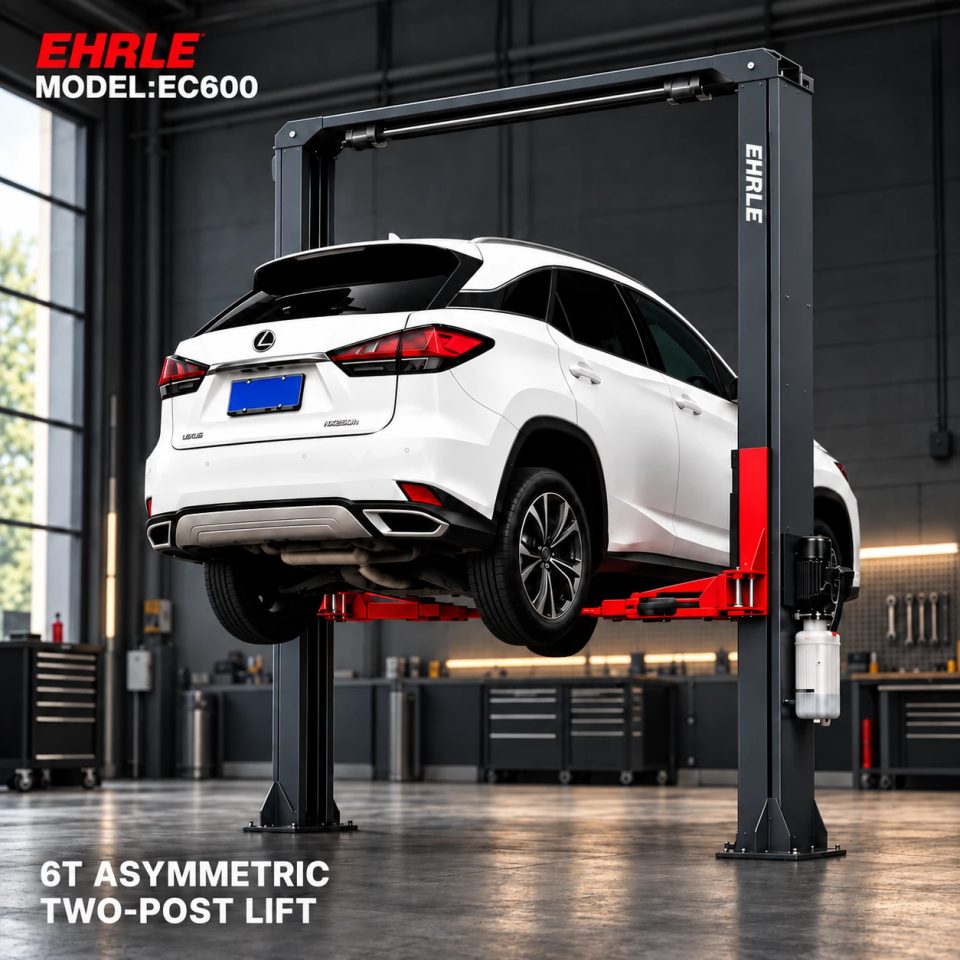
The EC600 is an asymmetric two-post hydraulic lift rated at 6,000 kg, with 1,800 mm maximum lifting height and 2,840 mm clear width between posts. Its configuration notes call for axle loads, vehicle dimensions and lifting-point information so the supplied arms and installation scope can be established.
Those figures are useful for initial selection. They do not publish a universal permissible centre-of-gravity shift, an arm-by-arm load limit or an engine-removal approval for a particular vehicle. A 6T label cannot fill those gaps.
Identify the vehicle variant, intended components to remove and the OEM service procedure when requesting the support review. Do not assume a photographed SUV position approves a different vehicle or a later stripped condition.
3. H4: distinguish runway support from an auxiliary jack arrangement
H4-9A is rated at 4,000 kg and H4-12A at 6,000 kg. Their published runway lengths, excluding ramps, are 4,600 mm and 5,700 mm respectively. A runway-supported vehicle presents a different support arrangement from a vehicle held through two-post lift pads.
If the planned work involves a rolling jack, its selection becomes a separate part of the review. The H4 rolling jack is optional; its capacity, adapters and supplied quantity must be confirmed. The H4-12A’s 6,000 kg complete-lift rating is not an established rating for that optional jack.
A task may also change which wheels or parts remain supported. Establish the actual arrangement through the applicable instructions instead of assuming a four-post layout automatically resolves every heavy-component job.
4. Specify vehicle stabilization separately from component handling
Supporting a gearbox or engine and stabilizing the vehicle that remains are different functions. A purchase brief should identify both, without treating a component-handling device as an automatic substitute for the vehicle’s required supplementary support.
ALI’s lift-safety guidance discusses high-reach vehicle support stands for work involving substantial weight displacement. The exact equipment, contact locations and procedure still need to come from the vehicle/lift instructions and qualified review for the proposed job. This article does not prescribe stand quantity, position or a support-transfer sequence.
Ask the supplier to identify which support accessories, if any, are included and which are separate. Keep each device’s intended purpose and applicable load rating explicit rather than grouping everything under “jacks supplied.”
5. Check work access after the support package is defined
Access for a component-handling device must coexist with the approved vehicle support. Show the provider the intended service task and the space needed for that device, the supplementary support and the technician. A bay may fit the vehicle while leaving insufficient access for the planned job.
For EC600, include the selected arms and adapters in that layout. For H4, include the runways and any optional rolling-jack arrangement. Do not move a contact point, omit necessary support or alter an accessory merely to create a removal path.
Where the proposed package cannot accommodate the documented procedure, resolve the equipment selection before purchase. Nominal maximum lift height alone does not describe all the usable working and component-transfer positions.
Your heavy-component-service purchase brief
Provide:
1. Vehicle make, model, variant, relevant weights and OEM lifting/service information.
2. Components to be removed or installed and the intended work stages.
3. Exact lift, arms/pads or runway/rolling-jack configuration.
4. Required vehicle stabilization and separate component-handling equipment.
5. Working access, floor plan and the applicable equipment instructions.
Request a documented task-and-configuration review with included accessories clearly identified. Installation, operator training and service work must follow the relevant model documents and qualified site assessment.
Send EHRLE this brief to discuss EC600 or H4 candidates. The useful purchasing result is a support package appropriate to the actual service job, not a promise that matching the vehicle weight to a lift rating settles every stage.
Frequently asked questions
Does removing an engine always make the vehicle safer on the lift?
No. Total mass may fall while balance changes. The remaining vehicle and the work sequence still require an appropriate support arrangement.
Does EC600’s 6T rating approve every gearbox-removal job below 6T?
No such approval is established by the rating. Vehicle geometry, permitted load distribution, support and the actual procedure remain relevant.
Is the optional H4 rolling jack rated at the same capacity as the main lift?
That is not established by the current record. Confirm its own rating, configuration and supplied scope.
Can a gearbox-support device automatically replace vehicle stabilization equipment?
Do not assume that. The functions are different; use the equipment and support arrangement specified for the actual vehicle, lift and task.
Sources and image notes
Product examples use published, enabled and verified EHRLE EC600 and H4-9A/H4-12A records checked on 30 October 2026. Related pages are linked below. General primary references: CCOHS, Garages — Hydraulic Lifts — Operation, at ccohs.ca; Automotive Lift Institute, Lift Safety, at autolift.org. They support the changing-balance and stabilization principles, not approval or certification of the EHRLE models.
Cover and gallery are product scene illustrations, not demonstrations of engine/gearbox removal or verified customer installations. The pictured support positions and accessories do not establish an approved work sequence or standard inclusion. The gearbox example is hypothetical.
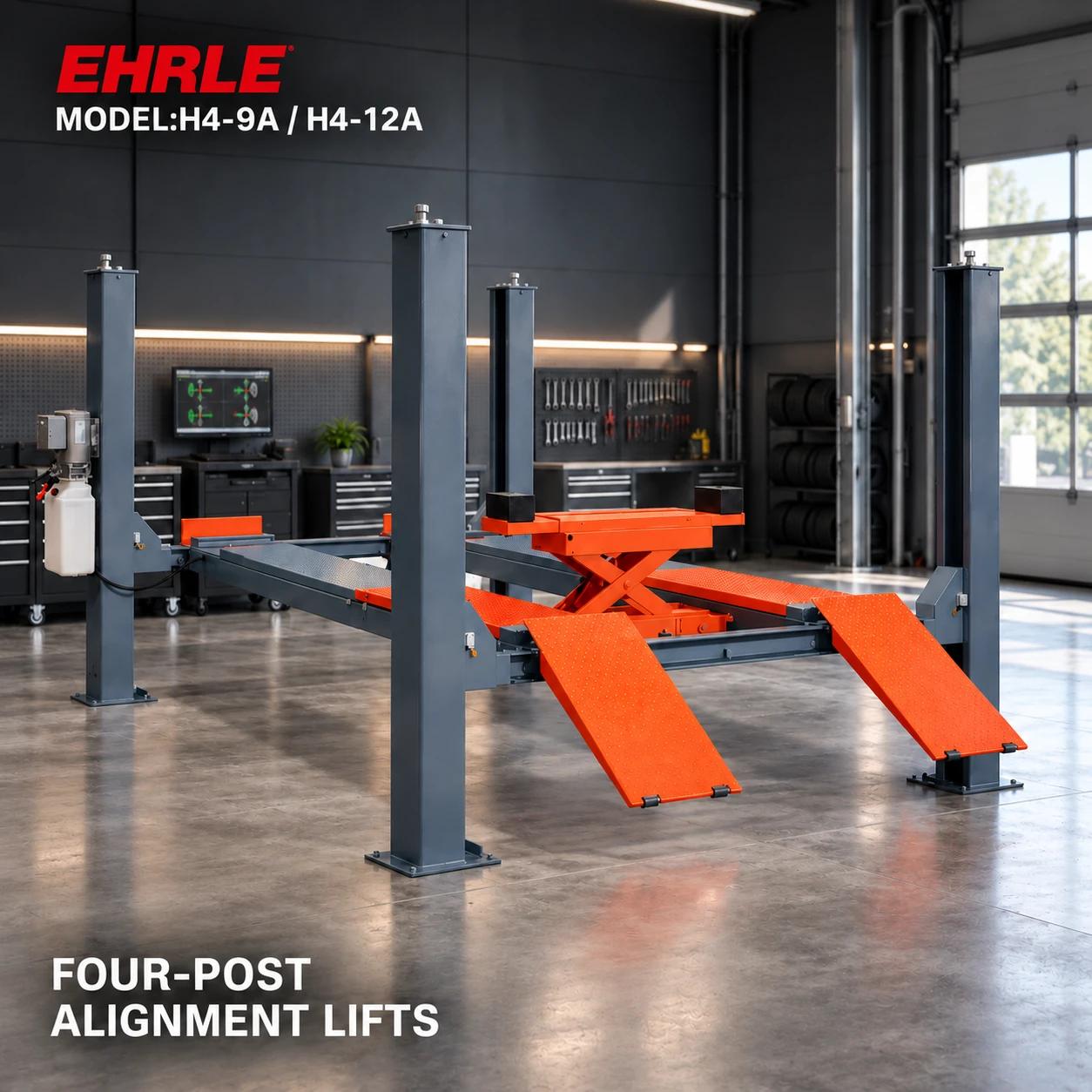
Product scene illustration. Confirm the jack capacity, adapters and included quantity separately; the picture is not a heavy-component service demonstration.