Lift Arm Restraints, Load-Holding Locks and Release Controls: What Buyers Should Check
Use EC500 and H4 examples to distinguish arm restraints, load-holding devices and release controls, then request the correct manuals and handover evidence.
Ask what is being restrained and what is being released
A quotation may mention automatic arm locking, mechanical locking or single-point release. These descriptions answer different questions. Before comparing them, identify the component, its function and the instructions for the supplied model. A release-control description is not a complete specification of every safety function.
The EHRLE EC500 record lists automatic arm locking and single-side manual lock release. The H4-9A/H4-12A record lists mechanical locking and single-point manual release on a four-post runway arrangement. This guide separates the questions buyers should ask; it does not provide a locking, lowering or adjustment procedure.
Arm restraints concern the swing-arm arrangement
In its explanation of two-post lifts, manufacturer BendPak describes arm restraints as keeping the arms in position during normal service. It cautions that these devices are not intended to arrest a vehicle that has started falling after improper loading. This is general context for the term, not an EC500 design specification.
Source: https://www.bendpak.com/blog/two-post-safety-lift-carriages-and-arm-restraints
For EC500, request the actual restraint identification, engagement checks and applicable instructions. Do not assume a particular gear design, engagement height or adjustment method from another manufacturer’s illustration. Automatic arm locking also does not establish that the pads reach the approved lifting points or that an individual vehicle is correctly supported.
Load-holding devices are a separate documentation question
The Automotive Lift Institute identifies a load-holding device as a lock or latch, separately discusses restraints and locking devices, and emphasizes following the manufacturer’s instructions and receiving training for the particular lift. Its guidance provides a reason to request clear identification of these functions in the supplied documents.
Source: https://www.autolift.org/be-a-smart-auto-lift-user/
Ask the supplier to identify the load-holding arrangement and explain its prescribed use through the exact manual and operator training. Do not infer supported working positions or lock spacing from maximum lifting height. General industry guidance does not certify either EHRLE model or establish that they share another manufacturer’s mechanism.
EC500: automatic arm locking does not mean automatic operation
The EC500 is a 5,000 kg overhead two-post lift with a listed single-side manual release and automatic arm locking. These two entries can coexist: they describe different aspects of the equipment. The word automatic in the arm-locking entry does not mean the entire lift automatically performs vehicle positioning, support verification or lowering.
Ask for a manual that clearly labels the restraint system, load-holding devices and release controls, together with the applicable checks and sequence. The current product record does not provide all of those details, so leave them pending in the purchase review until the supplier provides them.
H4: compare the runway mechanism on its own terms
The H4 record describes an under-mounted single cylinder, steel cables and pulleys, mechanical locking and single-point manual release. H4-9A is rated at 4,000 kg and H4-12A at 6,000 kg. Their runway support arrangement differs from EC500 swing-arm support.
Do not turn this structural comparison into a claim that one lock system is universally safer or that a release control works identically on all models. Request the exact H4 version’s operating and inspection instructions. Any optional rolling jack also needs its own rating and applicable instructions; its safety functions cannot be assumed from the main lift’s release description.
Put the functional evidence into the handover requirements
Request the following before accepting the equipment documentation:
1. Exact lift configuration and identification of the main load-holding devices.
2. For a swing-arm lift, identification and instructions for the arm restraints.
3. Clear labelling of the release controls and their prescribed operation.
4. Model-specific engagement checks, inspection requirements and fault reporting instructions.
5. Separate documents for any auxiliary jack or other lifting accessory.
6. Operator training covering the supplied configuration, with a record of completion.
Ask the supplier to resolve ambiguous terms in the quotation. A photo of a lever or a phrase such as safety locks included does not replace the relevant identification and instructions. Neither a product capacity nor this article establishes a component’s adjustment value or replacement criterion.
Keep a malfunction outside normal operation
ALI guidance says that issues found during the daily review should be reported and that the lift should remain out of use until resolved by qualified service personnel. A procurement pack should therefore identify the applicable fault-reporting and service route, alongside the operating documents.
Do not use this guide to bypass a restraint, defeat a lock, adjust a mechanism or recover a stuck vehicle. Those actions require the appropriate model-specific instructions and qualified assistance. Send EHRLE your proposed model and accessory list to request clear lock/restraint documentation as part of the quotation and handover.
FAQ: Are an arm restraint and a load-holding lock the same purchase item?
They describe different functions. Request identification and instructions for each applicable system on the exact lift. Do not assume the presence of one confirms the specification or correct operation of the other.
FAQ: Does single-point manual release mean no mechanical locks?
No. The H4 record lists mechanical locking alongside single-point manual release. The release description alone does not tell you the complete mechanism or operating sequence; obtain the actual manual.
FAQ: Can I copy another brand’s lock adjustment or engagement height?
No such equivalence is established here. Obtain the supplied model’s instructions and qualified service support. This guide transfers no numerical adjustment or component-load values from the external sources.
Sources and image notes
EHRLE EC500 and H4-9A/H4-12A published, enabled and verified product records were checked on 21 October 2026. Related product pages are linked below. The ALI and BendPak pages above are used only for their general explanations, not as EHRLE certification, a design-equivalence claim or a substitute operating manual.
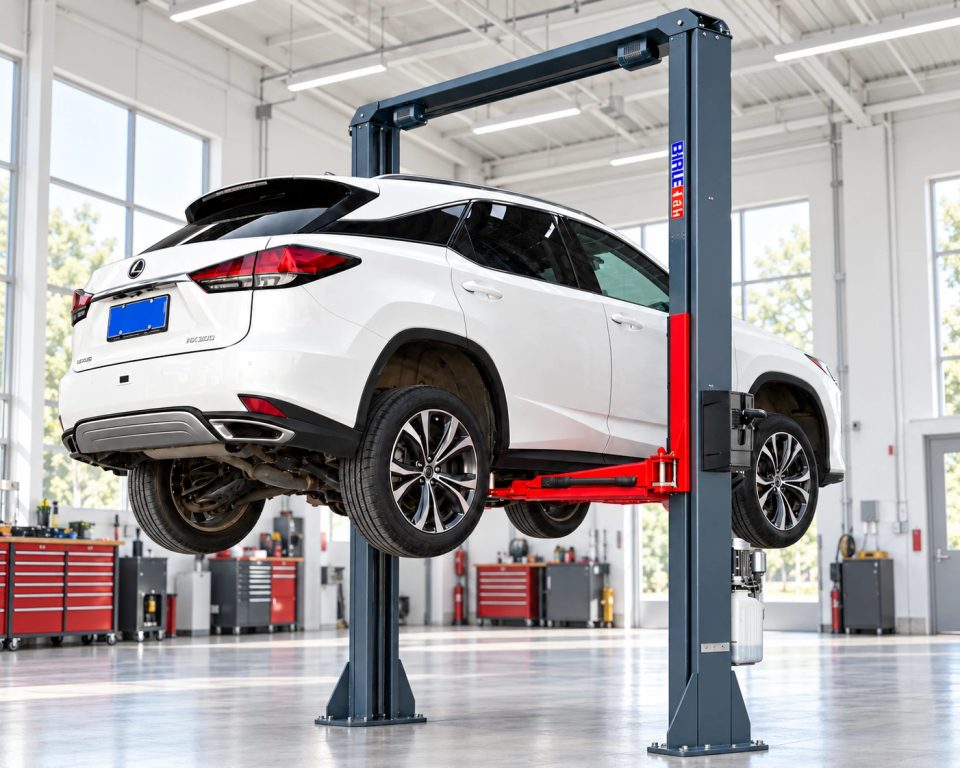
The cover and gallery are product scene illustrations, not close-up component inspections or proof that a particular lock is engaged. Neither image demonstrates an operating procedure, accessory inclusion or an approved installation for the pictured vehicle.
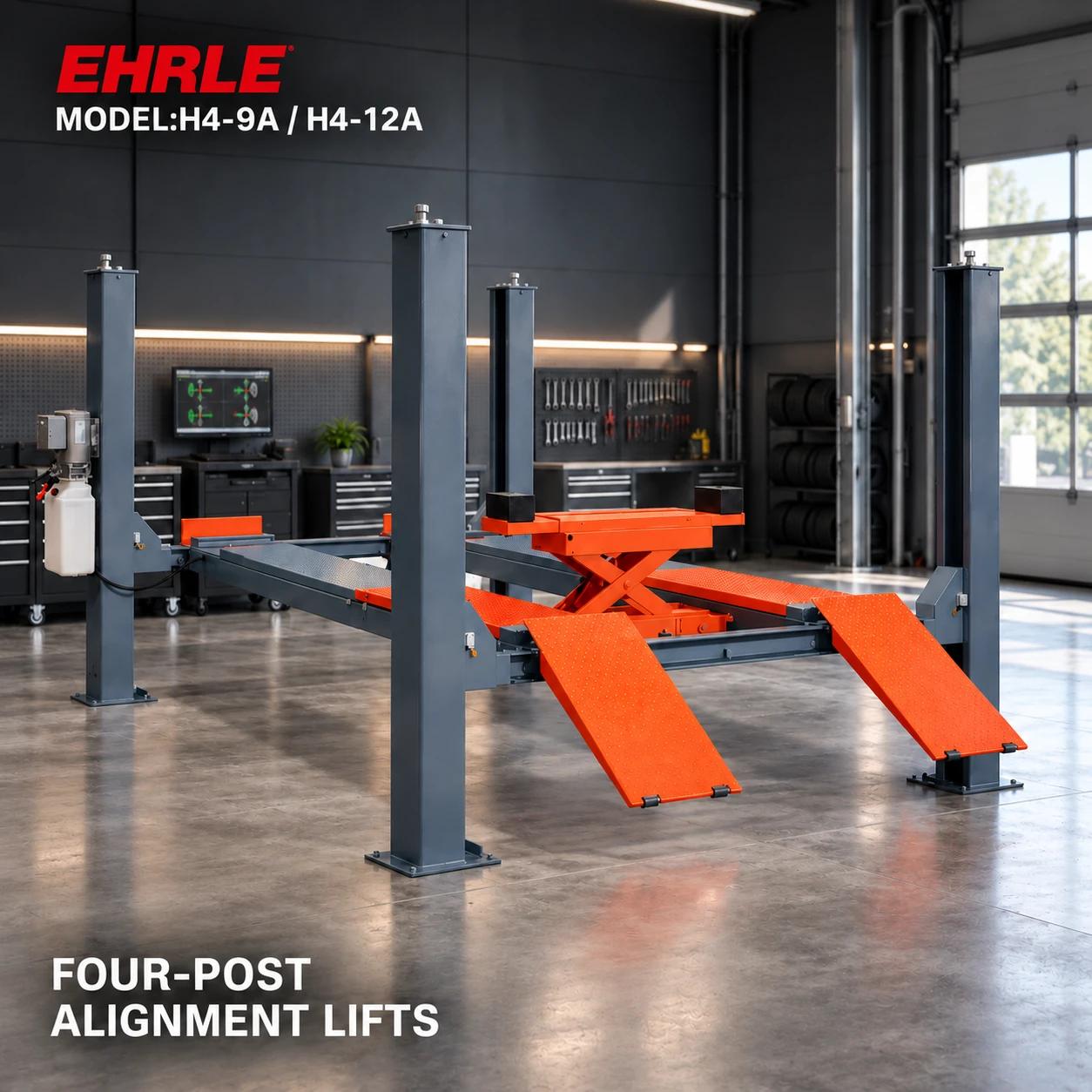
Product scene illustration. Mechanical locking and single-point manual release are listed features; obtain the exact model’s operating and inspection documents.