Lift Delivery Checklist: Match Packages, Accessories and the Agreed Order
Use 6010B/6010C and BH-900 examples to connect ordered models and accessories with package contents, then record delivery discrepancies clearly.
Connect the agreed equipment scope to the packing list
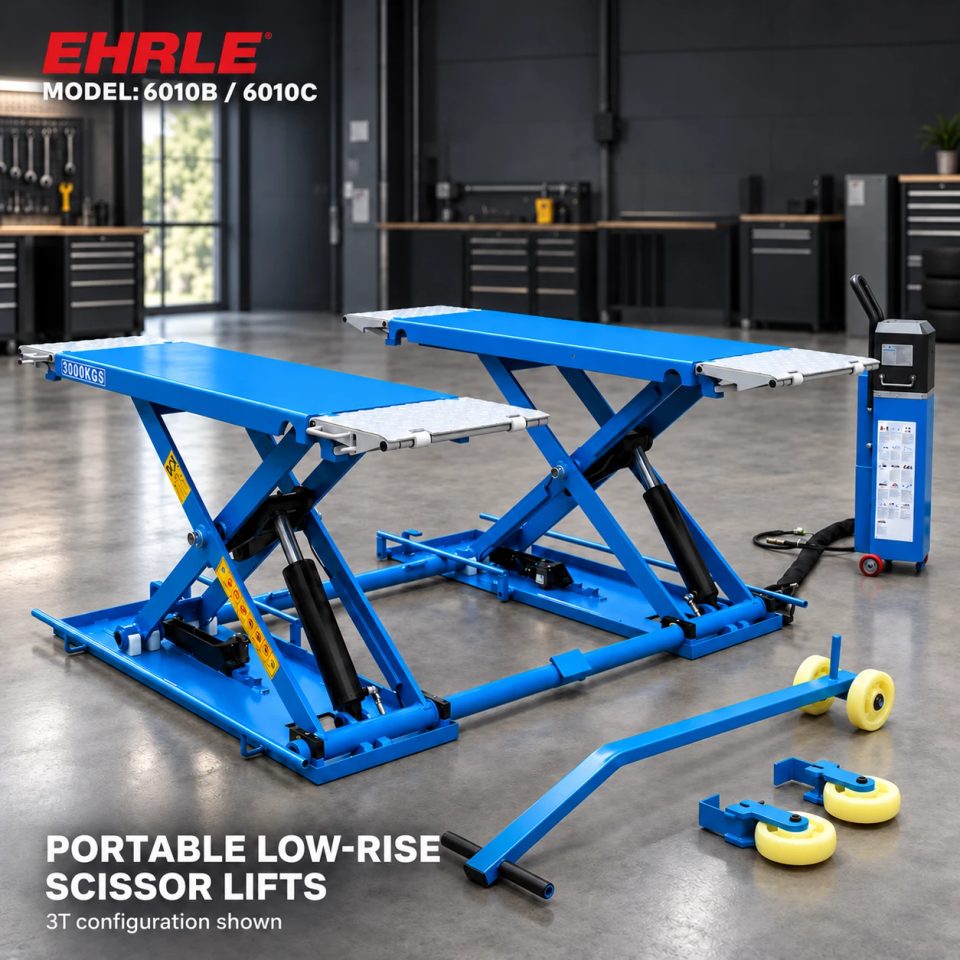
A product photograph helps identify equipment, but it is not a packing list. Before dispatch, ask for an itemized list that connects the ordered lift version and accessories to the shipment’s actual package identification. The aim is to make it possible to locate each agreed item when the shipment arrives.
This guide proposes a receiving-document method using the EHRLE 6010B/6010C and BH-900 records as examples. It does not claim a fixed crate count, packing weight or standard accessory quantity. Those details must come from the actual order and shipment documents.
Keep 6010B and 6010C identification explicit
The 6010B is listed at 3,000 kg capacity and 1,000 mm maximum lifting height; the 6010C at 4,000 kg and 1,200 mm. Their platform dimensions differ. A shipment line reading only “portable scissor lift” leaves the receiver without a clear reference to the selected version.
Ask the equipment schedule and packing list to identify the ordered model consistently. The current shared cover image is labelled as showing the 3T configuration. It is not proof that the 4T version has the same dimensions or arrives with exactly the pictured accessories.
Make agreed pads, mobility equipment and release options traceable
The 6010B/6010C configuration record asks buyers to agree the support pads, removable mobility kit and supplied accessory list in the order. Electric lock release is listed as standard, with a pneumatic option subject to order confirmation.
Where those items form part of the agreed supply, ask the packing list to identify their descriptions, quantities and package locations. Keep an optional release version tied to the ordered equipment configuration. Do not infer a complete set of pneumatic accessories or a pad quantity from a generic image. Any missing details should be clarified against the actual order before dispatch.
BH-900: distinguish the listed arrangement from unconfirmed accessories
The BH-900 record covers a narrow 900 kg motorcycle table with a front wheel chock and loading ramp. It also states that motorcycle securing equipment and procedures must suit the actual service task; the chock alone is not a universal restraint.
Ask the delivery list to identify the agreed ramp, chock and any separately confirmed securing equipment. Do not assume that a particular strap or additional support is included unless the order says so. A widened 1,300 kg tricycle version is a separate product and should not be substituted for, or conflated with, this narrow-table specification.
Request actual shipment data instead of estimating from product data
For the shipment being prepared, request package identifiers, contents, dimensions and relevant net/gross weights, together with the handling information applicable to those packages. Ask how loose accessories and documents are identified and whether any items will be supplied separately.
Product equipment weight, where published, is not automatically shipment gross weight. The records used here do not establish a universal packing method or package count. Do not estimate freight volume, choose unloading equipment or make handling assumptions from the scene illustration. Have the logistics and receiving parties use the actual packing and handling documents.
Use a simple receiving matrix
A proposed receiving record can contain:
1. Order reference and exact lift model/version.
2. Agreed component or accessory description.
3. Ordered quantity and packing-list quantity.
4. Package identification and stated contents.
5. Quantity received and visible condition observed.
6. A photo reference for an observed discrepancy.
7. Supplier clarification, replacement or other agreed action and its status.
This matrix helps organize observations; it is not proof of correct installation, vehicle compatibility or technical acceptance. Keep the original shipment documents alongside it so differences can be traced to a specific item rather than a general “parts missing” statement.
Resolve discrepancies before the affected equipment is relied on
Compare delivered identification, power-unit version and accessories with the agreed schedule. The 6010 family lists alternative input-power configurations; the BH-900 separately lists 220 V or 380 V choices. Confirm the selected voltage, phase and frequency rather than treating a catalogue option list as proof that the delivered unit accepts every supply.
If an item or document differs from the order, record what was observed and request clarification from the supplier. Installation, connection and operation must follow the applicable supplied documents and qualified assessment. This receiving guide does not provide unloading, assembly, electrical or load-testing procedures.
What to request from EHRLE before dispatch
Provide the order reference, exact model, confirmed accessory schedule, destination and receiving contact requirements. Ask for the actual packing list, package-to-content mapping, applicable handling information and the model documents needed by the installer. Agree how separately shipped items or unresolved scope questions will be identified.
A clear package record reduces ambiguity at receiving. It does not change the agreed contract scope or establish a shipping date, packing weight or included accessory that has not been confirmed for the order.
FAQ: Does everything visible in a product image come with the lift?
Do not assume that. Use the agreed equipment and accessory schedule, then match its items to the actual packing list. Images may show illustrative configurations or options.
FAQ: Can published equipment weight be used as shipping gross weight?
Not without shipment confirmation. Request the actual packing weights and dimensions for the prepared packages rather than treating a product weight as a complete freight figure.
FAQ: Does a completed receiving checklist mean the lift is ready to use?
No. Receipt and scope checks do not replace the required installation, commissioning, operating documentation or vehicle-compatibility assessment.
Sources and image notes
Product examples are drawn from EHRLE 6010B/6010C and BH-900 records checked on 15 October 2026; related pages are linked below. The packing and receiving matrix is a proposed buyer workflow, not a verified description of a particular shipment. The cover is a product scene illustration showing the 3T configuration, not a dispatch photograph or complete accessory inventory.