Lift Raising Time vs Complete Cycle Time: What Buyers Should Verify
Use BH88 and BH-900 examples to distinguish movement time, a complete operating cycle and workshop throughput. Request timing conditions and repeated-use limits before ordering.
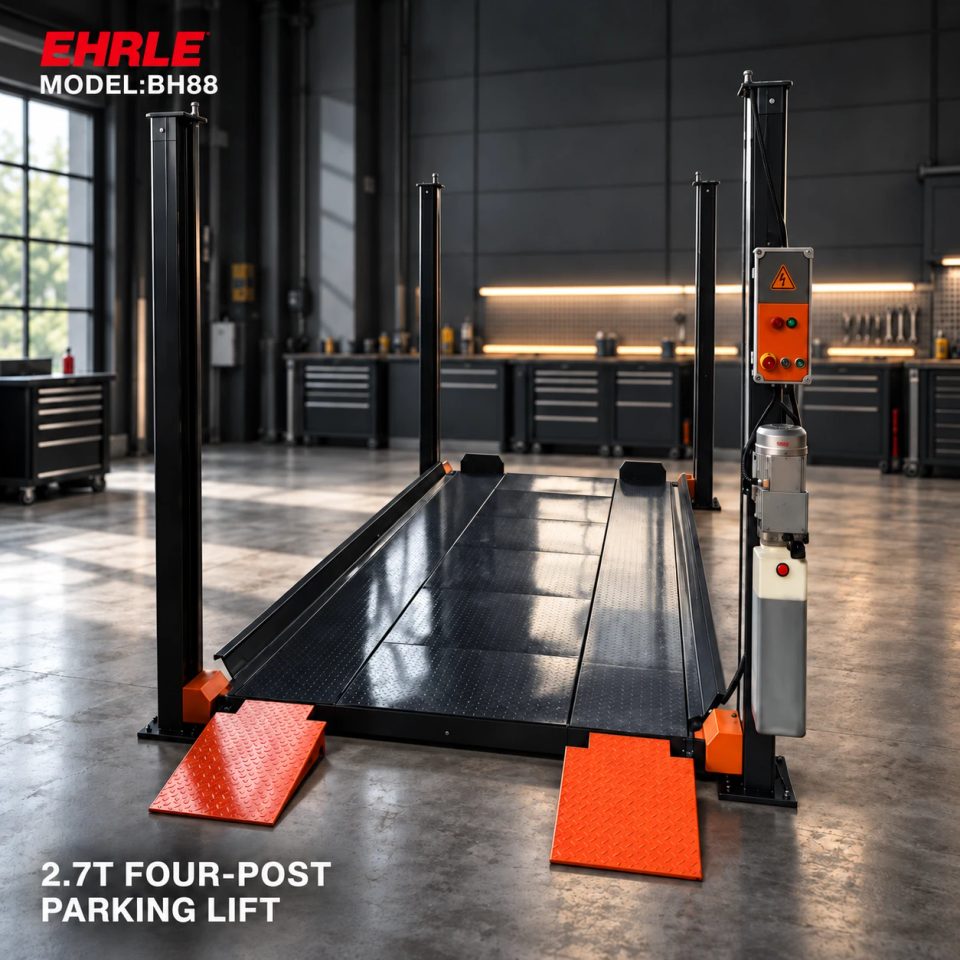
Three time figures that buyers should keep separate
A lifting-time specification describes equipment movement. A complete operating cycle also includes preparing, positioning and releasing the vehicle according to the selected equipment instructions. Workshop throughput additionally depends on how long the actual job occupies the bay. These are different measures.
BH88 parking equipment and the BH-900 motorcycle table illustrate the distinction. They serve different purposes and are not alternatives ranked by speed. Use their published figures to ask better quotation questions, rather than to promise vehicles per hour.
BH88: approximately 50 seconds up and 40 seconds down
The verified BH88 record lists approximately 50 seconds raising and 40 seconds lowering for its 2,700 kg four-post parking lift. It also specifies manual release. The two listed movement times add to approximately 90 seconds, but that arithmetic is not a documented complete parking or retrieval cycle.
Parking access, vehicle positioning, the applicable lock/release procedure and the movement of the vehicle in the lower space must be accounted for separately. The current record does not define whether the timing includes these actions, the test load or the precise start and stop positions. Request those conditions before adopting a time target for your site.
BH-900: 30 seconds lifting is not a complete service cycle
The narrow BH-900 motorcycle table is rated at 900 kg and lists 30 seconds lifting time, 190 mm minimum height and 1,200 mm lifting height. Its current record does not publish a lowering time or a measured loading-to-unloading cycle. Do not invent the missing lowering value by assuming it equals the raising time.
Loading, positioning, securing the motorcycle and carrying out the work take time beyond table movement. The front wheel chock is part of the listed arrangement, not a universal restraint for every motorcycle or task. A demonstration needs to follow the supplied securing instructions; removing preparation steps to improve a timing result would make the result unsuitable for planning.
Compare like-for-like timing conditions
Ask each supplier to identify the exact model, ordered configuration, load, travel endpoints and supply used for its quoted time. A partial-height movement should not be compared directly with a full-travel figure. An unloaded demonstration also needs to be identified as unloaded.
Both current records list a 2.2 kW motor and a choice of 220 V or 380 V supply. Matching motor power does not establish equal travel time or repeated-use capability. Confirm phase, frequency and the ordered drive configuration. These product records do not establish a performance change from selecting one voltage option over the other.
Movement time does not establish permitted repeated use
A fast single movement does not document how frequently the equipment may be cycled. Neither current record specifies an allowable number of starts per hour, a duty-cycle percentage or a required rest period for repeated operation. Those limits remain information to obtain, not figures to calculate from the advertised seconds.
Give the supplier your expected pattern: peak arrivals, the number of raise/lower events, likely load and time held at a working or parking position. Ask for the applicable operating limits and their source in the exact equipment and drive documentation. Any acceptance demonstration must remain within those limits.
Plan capacity around the task that occupies the space
For BH88, plan the sequence for the actual two-level parking arrangement and access route. Storage time and vehicle retrieval needs may matter more than a small difference in lifting time. For BH-900, define the maintenance task and how long the table stays occupied before the next motorcycle can be loaded.
If you build a capacity estimate, record preparation, movement, the task itself and clearance for the next vehicle as separate observations. Use representative vehicles and trained operators following the equipment instructions. Treat the result as an estimate for that workflow and its conditions, not a universal production rating or a guaranteed return on investment.
Put a measurable demonstration in the purchase documents
Include the following in the quotation review:
1. Exact model, capacity, intended use and ordered electrical configuration.
2. What each quoted time measures, including load and travel endpoints.
3. Raising and lowering values separately; clearly mark unavailable data.
4. Applicable repeated-use limits from the model and drive documents.
5. A representative parking or service sequence, including required preparation and release actions.
6. Agreed demonstration conditions, timing boundaries and any acceptance tolerance confirmed by the supplier.
7. Operator training and the documents that govern the demonstrated sequence.
Contact EHRLE with your parking access pattern or motorcycle service workflow to review BH88 or BH-900. Specify the complete task and required evidence before treating a movement-time figure as a buying advantage.
FAQ: Does BH88 complete a parking transaction in 90 seconds?
The record does not establish that. Approximately 90 seconds is only the sum of its listed raising and lowering times. Vehicle movements, preparation and the prescribed operating sequence need separate assessment.
FAQ: Can I use the BH-900 30-second figure to calculate motorcycles per hour?
Not by itself. It is a lifting-time figure, with no published lowering time or complete service-cycle measurement. The maintenance job and the documented loading/securing process also occupy the table.
FAQ: Is a faster single lift evidence of continuous-duty operation?
No repeated-use rating is established by that figure. Request the permitted operating pattern and any rest or starting limits from the exact model and drive documentation. Do not substitute a calculated cycles-per-hour figure.
Sources and image notes
Model figures come from the published, enabled and verified EHRLE BH88 and BH-900 product records checked on 24 October 2026. Related product pages are linked below. The Automotive Lift Institute article How to Safely Use a Car Lift or Truck Lift, at autolift.org, supports the general need for model-specific operator training and following manufacturer instructions; it supplies no BH88 or BH-900 timing or repeated-use rating and is not evidence of certification for either model.
The cover and gallery are product scene illustrations, not timed test evidence or customer installation photographs. This guide addresses timing definitions and workload evidence, distinct from earlier vehicle-fit, bay-layout and maintenance-document guides.
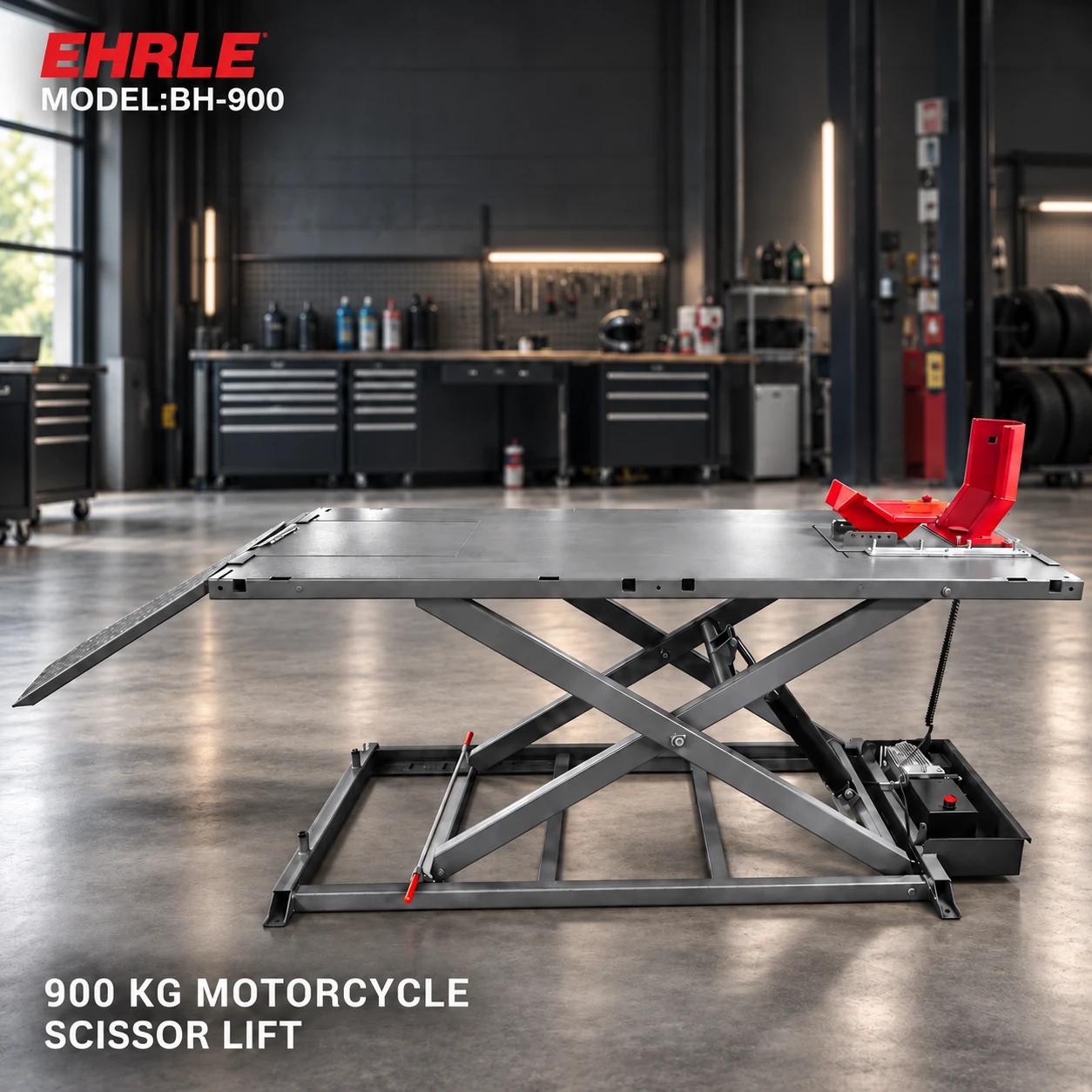
Product scene illustration. The published 30-second lifting time does not measure loading, securing, service work or unloading.