Two-Post Lift Adapters: Match Height, Contact Shape and Compatibility
Select an adapter that matches both the vehicle’s approved lifting point and the exact lift assembly. For workshops serving different vehicle types, extra height alone cannot resolve contact shape or arm reach; EF450 and EC450 illustrate the limits of catalogue height figures.
Key takeaways
• Choose the vehicle contact interface and the lift-side interface together.
• Extra adapter height cannot correct unsuitable arm reach or contact shape.
• A lift’s minimum height is not the height range of every optional adapter.
• Identify approved combinations and supplied quantities before accepting an accessory package.
1. Start with the vehicle’s lifting point, not a generic SUV adapter
The correct contact position comes from the vehicle manufacturer’s lifting information for the exact model and variant. A pad must reach and engage that specified point without treating adjacent bodywork, trim or an underfloor enclosure as an alternative support.
ALI’s lifting-point guidance calls for appropriate adapters positioned at the vehicle manufacturer’s recommended locations. Its safe-use guidance also distinguishes height adapters for some trucks from pad adapters that may be recommended for unibody vehicles. These serve different fit requirements; adding height is not the answer to every contact problem.
For a hypothetical mixed fleet, list the actual vehicle variants and their approved support interfaces. A sales description such as SUV kit does not define whether the kit matches a frame, a designated body lifting point or another vehicle-specific interface.
2. Match contact shape separately from the height you need
Adapter height addresses the vertical distance needed to reach a lifting point. Contact shape addresses how the load is transferred at that point. A tall adapter with an unsuitable contact surface still leaves the vehicle interface unresolved.
For example, a hypothetical pickup enquiry may involve a high frame lifting point, while another vehicle may require a specific body-point pad shape. Neither situation establishes that an accessory selected for the other will be appropriate. Use the vehicle instructions and the approved lift accessory arrangement together.
Keep arm reach in the same assessment. If a lifting point lies outside the arm’s permitted reach, a taller pad does not move the point horizontally into the approved range. Do not alter vehicle support locations to compensate for the wrong arm or adapter selection.
3. EF450 and EC450 height figures do not define an accessory kit
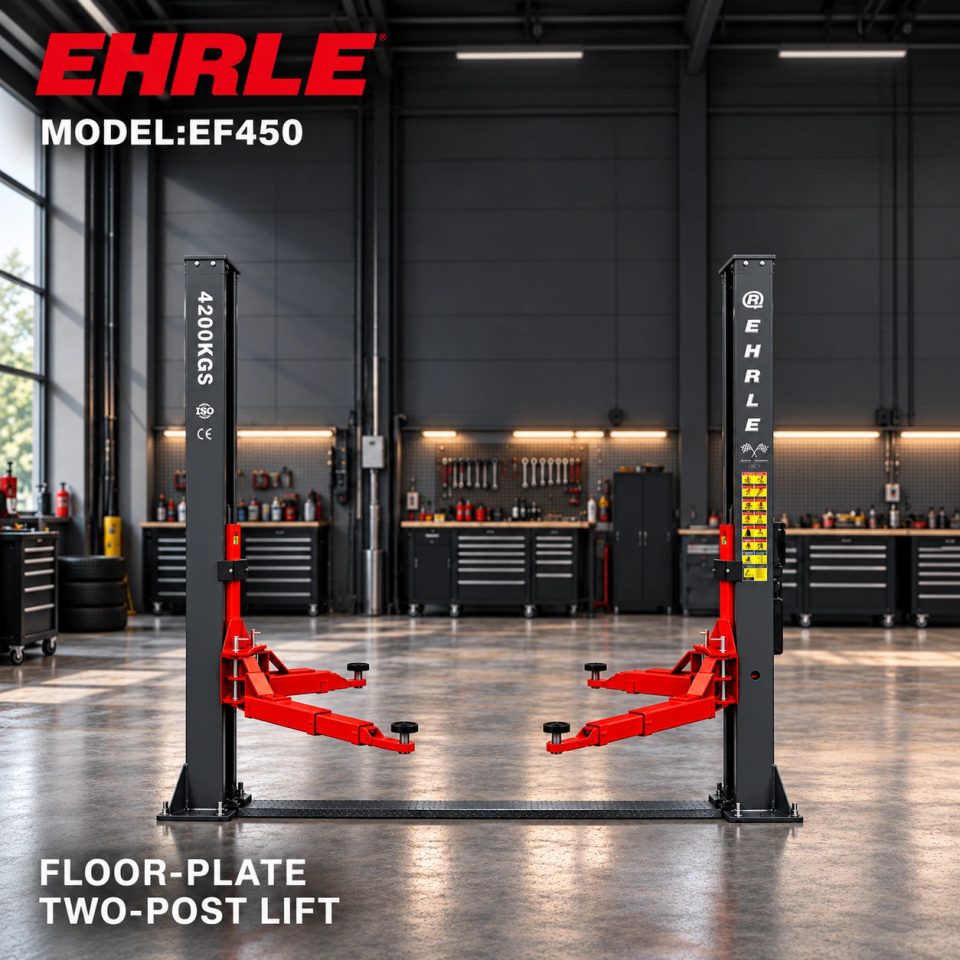
EF450 is the 4,200 kg floor-plate two-post model with a listed 110 mm minimum pad height. EC450 is the separate 4,200 kg overhead model with a listed 95 mm minimum height. These figures help compare the published base configurations; they do not publish the full height range of an optional pad or extension combination.
Both models list 3,000 mm clear column spacing, but that is not an arm-reach diagram. Matching a vehicle between the posts does not establish that all its lifting points are reachable with the selected arms and adapters.
The current records leave the exact supplied arm and adapter configuration to be confirmed. They do not identify a universal truck kit, an approved stacking arrangement or an accessory-by-accessory load rating. This guide therefore establishes no adapter dimensions, permitted extension count or compatible vehicle list for either model.
4. Physical fit at the lift arm is only the first compatibility check
An accessory that appears to fit a receiver is not thereby an approved part of the lift’s load path. Lift identity, the supplied arm/pad assembly and the accessory’s documented application must agree. Matching overall lift capacities does not establish interchangeable pads between models.
ALI recommends using adapters provided by the lift manufacturer and warns against homemade adapters or wood blocks. That general guidance supports checking the complete approved arrangement rather than improvising a spacer. It does not establish that EF450 or EC450 has any particular certified accessory.
Ask for the accessory identification, applicable lift models, permitted combinations and relevant load limitations. If the supplier’s documentation does not approve stacking, do not treat a pile of individually supplied extensions as a permitted assembly. A photograph cannot settle that question.
5. Order a vehicle-matched package with clear quantities and identification
The useful purchasing result is an itemized package tied to the intended vehicles and supplied lift. Separate standard contact pads from optional height extensions or vehicle-specific adapters, then identify what each part is for. Avoid a single unqualified line reading adapters included.
For a hypothetical shop serving passenger cars and pickups, provide both groups’ lifting information and request a compatibility review for each. The review may identify different approved accessories or a different lift configuration; do not assume one tall pad covers the whole fleet.
Record supplied quantities and how the approved parts and combinations will be identified during handover. Keep the relevant instructions with the lift so staff do not substitute a similar-looking accessory from another bay. Inspection and replacement must follow the applicable model documents; no universal wear limit is supplied here.
Your adapter selection brief
Provide:
1. Lift model and the exact arm/pad assembly being ordered or already installed.
2. Vehicle makes, variants, weights and OEM lifting-point information.
3. Required contact geometry, access clearance and lifting-point reach for review.
4. Identified standard and optional accessories, approved combinations and any limitations.
5. Supplied quantities, part identification and training/document scope.
Contact EHRLE with this brief to clarify an EF450 or EC450 package. Final selection should resolve both the vehicle contact and the lift-side compatibility, rather than add an unnamed extension to a capacity-based quotation.
Frequently asked questions
Does a taller pad automatically make a two-post lift suitable for an SUV?
No. The approved vehicle contact shape, arm reach, clearances, load distribution and lift/accessory compatibility still have to match.
Can EF450 and EC450 use the same adapters because both are rated at 4,200 kg?
That compatibility is not established by their equal capacities. Confirm the exact arm/pad assembly and the accessory’s approved application.
Does EC450’s 95 mm minimum height include every optional adapter?
The current record does not establish that. Obtain the dimensions of the actual supplied combination rather than transfer the base figure to it.
Can I stack extensions or use a wood block to gain height?
Do not improvise a support stack. Only use combinations explicitly permitted for the supplied equipment; ALI warns against homemade adapters and wood-block substitutes.
Sources and image notes
Published, enabled and verified EHRLE EF450 and EC450 records were checked on 3 November 2026; related pages are linked below. General primary references: Automotive Lift Institute, How to Safely Use a Car Lift or Truck Lift, and 2026 ALI Lifting Points Guide Eliminates Guesswork for Safer Vehicle Lifting, at autolift.org. These support model-specific lifting points and correct accessory selection, not an EHRLE certification claim.
Cover and gallery are product scene illustrations, not customer installations or evidence of an approved adapter configuration, part dimensions or certification. Pictured pads do not define the supplied accessory scope. The mixed-fleet, pickup and service-shop examples are hypothetical.
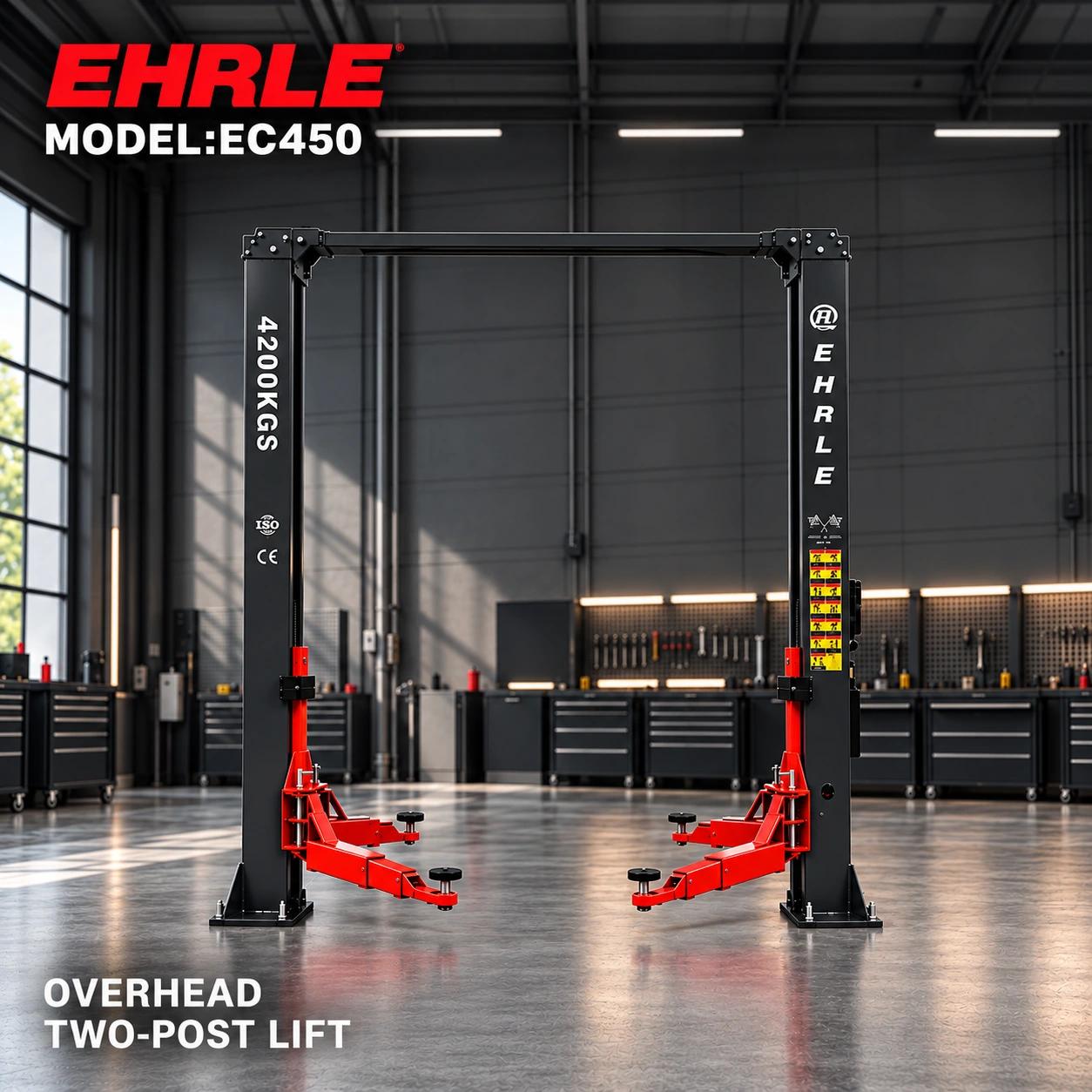
Product scene illustration. Its 95 mm listed minimum height does not establish the dimensions of every optional adapter arrangement.