Hydraulic Oil for Vehicle Lifts: What to Confirm Before the First Fill
Before commissioning a 6016 or EC500, confirm the approved fluid, power-unit documents, fill quantity and supply responsibilities. Lift tonnage alone cannot select the oil.
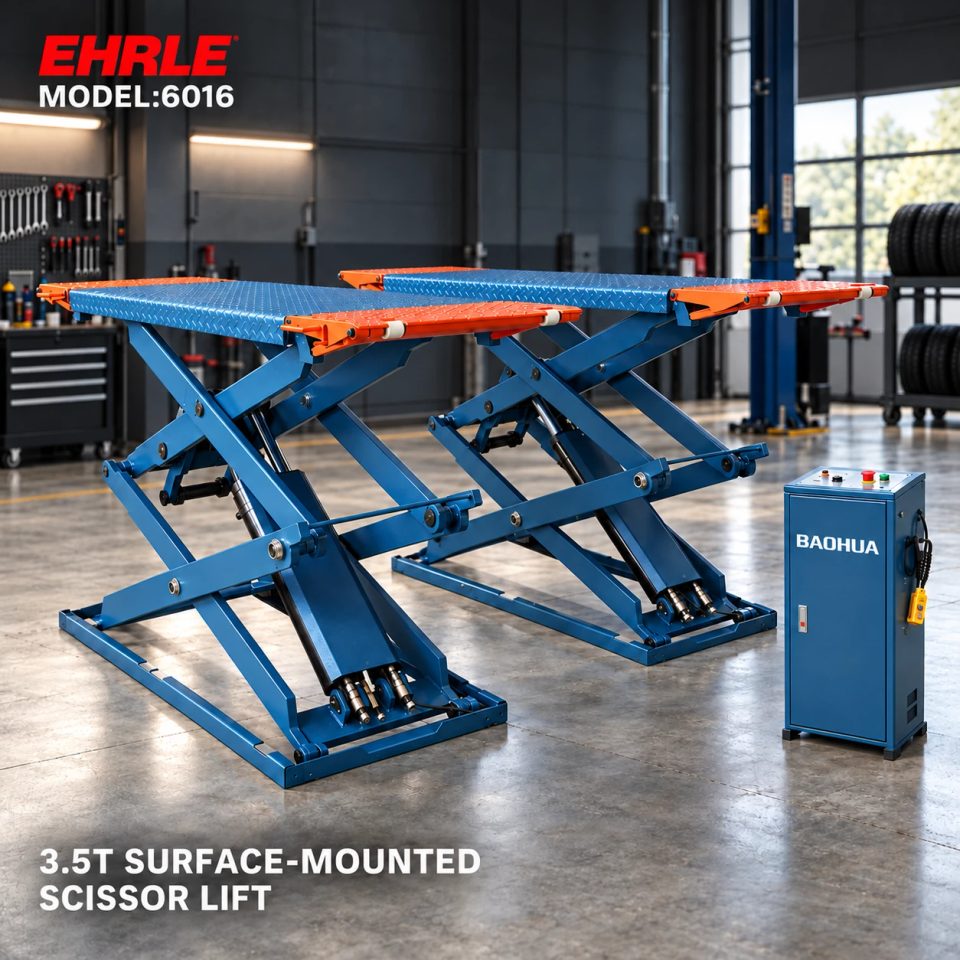
Specify the fluid before arranging first use
When purchasing a hydraulic vehicle lift, include the approved fluid specification and first-fill responsibilities in the order review. A catalogue may identify the drive as hydraulic without identifying the oil, quantity or conditions for checking its level. Missing information should remain an open commissioning item.
This guide uses EHRLE 6016 and EC500 to identify the questions buyers should resolve. Their current verified product records do not publish a hydraulic-fluid grade, fill quantity or fluid-change interval. This is a procurement guide, not an instruction to fill, bleed or adjust either lift.
6016: a separate cabinet does not establish reservoir capacity
The 6016 is a 3,500 kg surface-mounted full-rise double-scissor lift. Its published configuration describes electro-hydraulic lifting, a separate control cabinet, wired pendant and 24 V controls. None of those facts specifies which fluid to buy or how much the system needs.
Request the hydraulic power-unit identity and the applicable fluid instructions for the actual supplied version. A cabinet photograph does not establish the reservoir size, usable fill level or the system quantity after the installation connections are completed. Obtain the model-specific commissioning document rather than estimating litres from the illustrated cabinet.
EC500: identify the supplied power unit before ordering consumables
The EC500 is a 5,000 kg overhead two-post hydraulic lift. Its current record lists a VIBO hydraulic power unit, 2.2 kW motor and metal hydraulic oil pipes. The brand description and motor rating do not identify an oil specification or approved local substitute.
Ask for the exact power-unit identification, applicable manual revision and fluid requirement for the ordered lift. Keep the complete-lift instructions and power-unit documents together. If their requirements appear inconsistent, obtain clarification from the supplier before procuring or adding fluid. Do not transfer an instruction from a different power-unit version merely because its motor has the same rating.
Why a universal car-lift oil recommendation is insufficient
Manufacturer instructions can distinguish between hydraulic systems and document revisions. For example, BendPak’s SP-7XE/XEF full-rise scissor-lift manual, revision B6 dated September 2025, gives a specific oil requirement and explains its relevance to that model’s flow-divider arrangement. This is evidence for checking the exact manual, not an oil recommendation for EHRLE equipment.
The EHRLE records here do not identify an equivalent hydraulic design or authorize that other manufacturer’s fluid. Do not choose fluid from lift capacity, electrical voltage, oil colour or a generic online recommendation. Request the actual approved specification and confirmation of any proposed locally available equivalent.
Give the supplier the operating environment
Tell the supplier the expected workshop temperature range and whether the lift will be used in a heated indoor bay or another proposed environment. Ask whether the specified fluid and equipment operating limits cover those conditions. Do not select a different viscosity solely from a seasonal rule borrowed from another lift.
Neither current EHRLE record establishes numerical ambient-temperature limits or a cold-weather oil alternative. If the site falls outside the documented conditions, have the supplier resolve the configuration before ordering. This guide provides no temperature, viscosity or warm-up setting for either model.
Separate shipping condition, first fill and routine top-up
Ask whether the delivered system contains operating fluid, test residue or no fluid, and who is responsible for providing the approved first fill. The current records do not establish shipment with oil or oil inclusion. A packing list or an image of a reservoir is not enough to settle that question.
Request the initial quantity, the stated equipment position for checking the level and the installation/commissioning procedure from the applicable documents. For an existing lift, identify the current fluid before a proposed top-up or change. Unknown contents or an unexplained level change need qualified service assessment rather than an assumed compatible mixture.
Put fluid identification into the handover record
The buyer and service provider should be able to trace what was used: equipment and power-unit identity, manual revision, approved fluid specification, actual product supplied and commissioning date. Ask for the fluid supplier’s technical data and handling information where needed. Keep any equivalent-product approval with those records.
Have the qualified installer carry out filling, commissioning and checks according to the exact supplied documents. Obtain the manufacturer’s fluid inspection and replacement requirements; the current catalogue records establish no universal change interval. Retaining this information also makes a later service enquiry more useful than reporting only the lift’s nominal tonnage.
A pre-order hydraulic-fluid checklist
Confirm:
1. Lift model, ordered hydraulic power unit and applicable document revision.
2. Approved fluid specification and any environment-dependent conditions.
3. Written approval for the proposed local equivalent, if one is needed.
4. Shipment fluid condition and who supplies the first fill.
5. Required quantity and the documented method and equipment position for checking the level.
6. Qualified commissioning responsibilities and supplied operating instructions.
7. Manufacturer-defined inspection/replacement requirements and handover records.
Contact EHRLE with the selected 6016 or EC500 configuration, destination and workshop conditions to clarify these items before commissioning. A useful quotation closes the fluid-document gap rather than simply adding an unspecified container of hydraulic oil.
FAQ: Does the 6016 3,500 kg rating tell me how many litres to buy?
No. Rated lifting capacity does not establish reservoir capacity or the system’s required fill quantity. Obtain the exact power-unit and commissioning documents.
FAQ: Can I use the same oil for EC500 and 6016?
The current records do not establish a shared approved fluid. Compare the exact requirements and obtain supplier confirmation before choosing one stock item for both models.
FAQ: Does a model photograph prove that oil is included?
No. Confirm the shipment condition, fluid inclusion and first-fill responsibility in the order and applicable delivery documents. Do not start commissioning with those items unresolved.
Sources and image notes
EHRLE 6016 and EC500 published, enabled and verified records were checked on 26 October 2026; related pages are linked below. External reference: BendPak SP-7XE/XEF Full-Rise Scissor Lift Installation and Operation Manual, revision B6, September 2025, section Fill the Hydraulic Fluid (Oil) Reservoir, at bendpak.com. It is used only to illustrate why exact hydraulic-system documents matter; none of its oil grades, quantities or procedures is transferred to EHRLE equipment.
Cover and gallery images are product scene illustrations, not reservoir inspections, evidence of supplied oil, customer installations or approved vehicle-support demonstrations. This article adds fluid specification, first-fill scope and traceability detail beyond the earlier general maintenance-record guide.
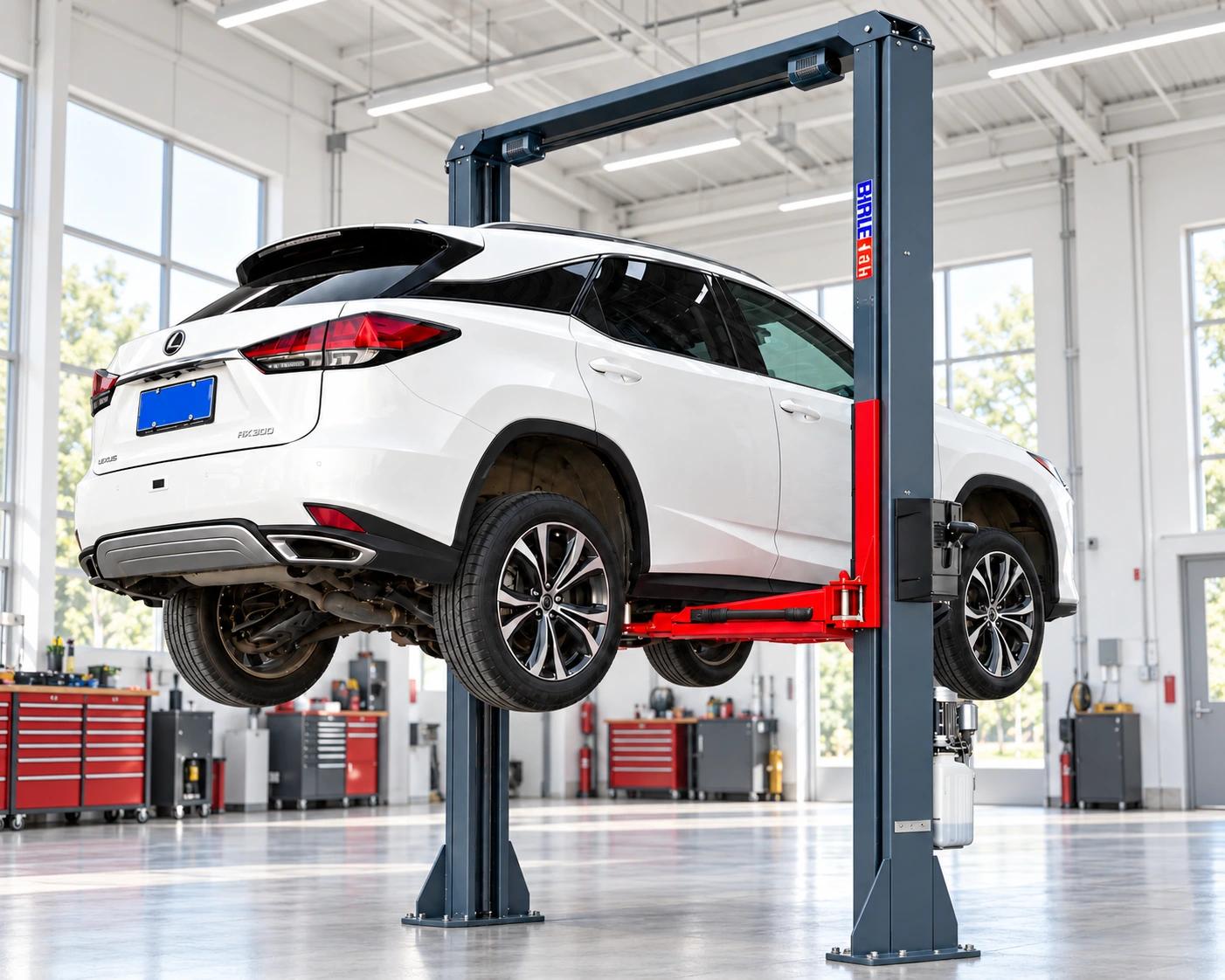
Product scene illustration. Use the ordered equipment documents to establish approved fluid and commissioning requirements; the pictured vehicle does not establish an approved support arrangement.