Wheel Removal on Vehicle Lifts: Specify Auxiliary Support Before Ordering
Use BH-900, BH-34T and EH-600C examples to distinguish complete-vehicle lifting from the support, restraints and accessories needed for a wheel-removal task.
Put wheel removal into the enquiry, not just the lift capacity
A lift quotation should identify the maintenance task as well as the vehicle and lifting capacity. If the job includes removing a wheel, ask what will support and secure the vehicle in that condition. A machine that raises the complete vehicle does not automatically provide the support arrangement needed for every subsequent service task.
The BH-900 motorcycle table, BH-34T wheel-engaging columns and EH-600C alignment lift illustrate three different purchasing questions. They serve different vehicles and are not interchangeable alternatives. Their comparison shows why auxiliary support, restraints and task approval need explicit attention in the order.
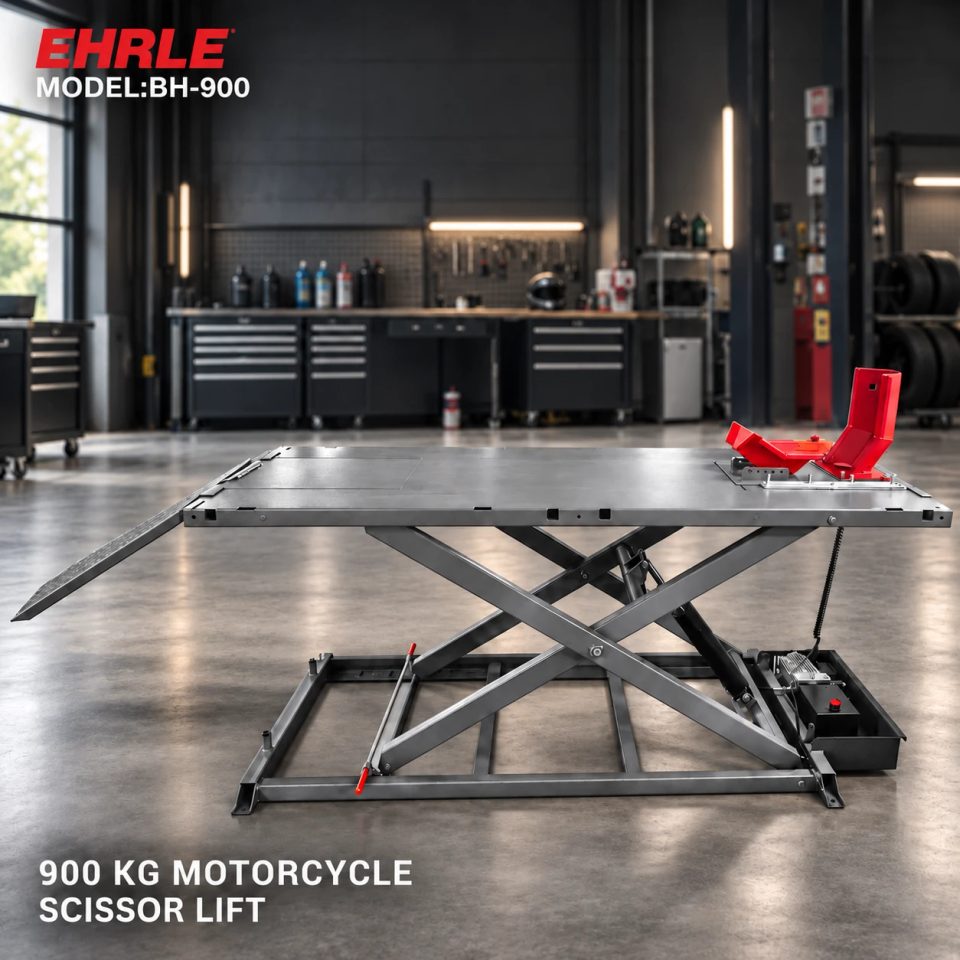
BH-900: a motorcycle table is not a documented wheel-removal package
The current BH-900 record describes a 900 kg motorcycle table with a front wheel chock and loading ramp. The working platform is 2,232 mm long and 750 mm wide. Its application notes make motorcycle dimensions, wheel positions and securing requirements part of the fit assessment. The chock alone is not a universal restraint.
If the intended work includes front- or rear-wheel removal, identify that task in the enquiry and request the approved support and securing arrangement for the actual motorcycle. The current product record does not identify a supplied motorcycle jack, a wheel-removal accessory rating or a task-specific support procedure. Do not assume those items are included because the table is described for motorcycle repair.
BH-34T: the wheels are part of the documented support arrangement
The BH-34T is a mobile wheel-engaging column system. Its standard four-column set is rated at 34,000 kg combined, with an 8,500 kg limit per column. The forks support the vehicle through its tires. This is relevant to under-vehicle inspection and service, but does not by itself provide wheels-free access.
The current product record explicitly requires a separate manufacturer-approved support and unloading procedure for wheel removal. Ask the supplier whether an approved solution exists for the intended vehicle and task, and request its equipment list, ratings and instructions. The 34T set rating is not a rating for unlisted stands or other auxiliary equipment. This article does not prescribe how to transfer the load or unload a column.
EH-600C: an optional secondary trolley must be specified separately
The EH-600C lists 6,000 kg main capacity and an optional secondary lifting trolley rated at 3,000 kg with 436 mm lifting height. An SUV support frame is also listed as optional. Their inclusion follows the quotation, rather than the presence of an accessory in a product illustration.
For work requiring secondary support, request confirmation of the exact trolley and adapter arrangement, permitted vehicle support points and applicable instructions. The main 6T rating does not enlarge the trolley’s separate rating or establish compatibility with every vehicle on the runway. A listed support-frame option also needs its actual identity, intended function and limits confirmed; it is not evidence of a universal wheel-removal package.
Write a separate line for every support function
A useful quotation distinguishes the main lift from each auxiliary lifting, supporting or securing item. For each item, ask for its model or part identification, quantity, rated capacity, relevant lifting or support range, contact interface and compatibility with the selected lift and vehicle. Where information is not established, mark it pending.
Do not add the ratings of unrelated components to invent a larger system capacity. Ask the supplier to confirm the limits of the complete approved arrangement for the task. A broad description such as service accessories included does not resolve whether the required supports, adapters and restraints are actually supplied.
A procurement checklist for a wheel-removal service bay
Provide the supplier with:
1. Vehicle models, relevant weights and manufacturer support-point information.
2. The specific wheel or axle work intended, including whether more than one wheel will be removed.
3. The proposed main lift model and ordered configuration.
4. The auxiliary equipment and securing items already available, with their identification and documents.
5. The bay layout and any access restrictions affecting the task.
Request a written task-compatibility review, an itemized supply list, separate equipment ratings and the applicable operating/support instructions. If an approved arrangement cannot be established from the available documents, leave wheel removal outside the confirmed equipment scope until the supplier resolves it. Installation and floor requirements must be checked by qualified personnel using the exact model documents and site conditions.
Use handover to verify the agreed task scope
Compare the delivered main lift, auxiliary equipment, adapters and restraints with the order schedule. Keep identification, ratings, instructions and the supplier’s compatibility confirmation together so the workshop can establish the permitted arrangement before using it. A missing accessory or an unidentified substitute leaves the intended task unresolved.
Send EHRLE your vehicle list and wheel-removal requirements to discuss the appropriate lift and any separately approved support equipment. Request confirmation of what is included, what is optional and what remains unverified. This is a purchasing guide, not a wheel-removal or load-transfer procedure.
FAQ: Does the BH-900 chock mean I can remove either motorcycle wheel?
The record does not establish that permission. It lists a front wheel chock and requires task-appropriate securing. Obtain the approved support and restraint arrangement for the motorcycle and the specific wheel-removal job.
FAQ: Can I remove a wheel while it is supported by a BH-34T fork?
The documented wheel-engaging arrangement does not provide wheels-free access. Wheel removal requires a separate manufacturer-approved support and unloading procedure. Do not treat the standard column set alone as approval for that task.
FAQ: Is the EH-600C 3T trolley automatically included?
No. It is a listed option and needs to appear explicitly in the quotation. Its separate rating, support arrangement and applicable instructions must be confirmed for the intended vehicle and job.
Sources and image notes
This guide uses published, enabled and verified EHRLE BH-900, BH-34T and EH-600C records checked on 17 October 2026. Related product pages are linked below. It focuses on task-specific auxiliary-support purchasing evidence, beyond earlier articles about motorcycle loading, column wheel loads and main-versus-secondary ratings.
The cover and gallery are product scene illustrations, not customer installations or demonstrations of an approved wheel-removal procedure. The BH-900 image shows an empty table; the BH-34T image shows wheel-engaging support. Images do not establish inclusion or certification of unlisted auxiliary equipment.
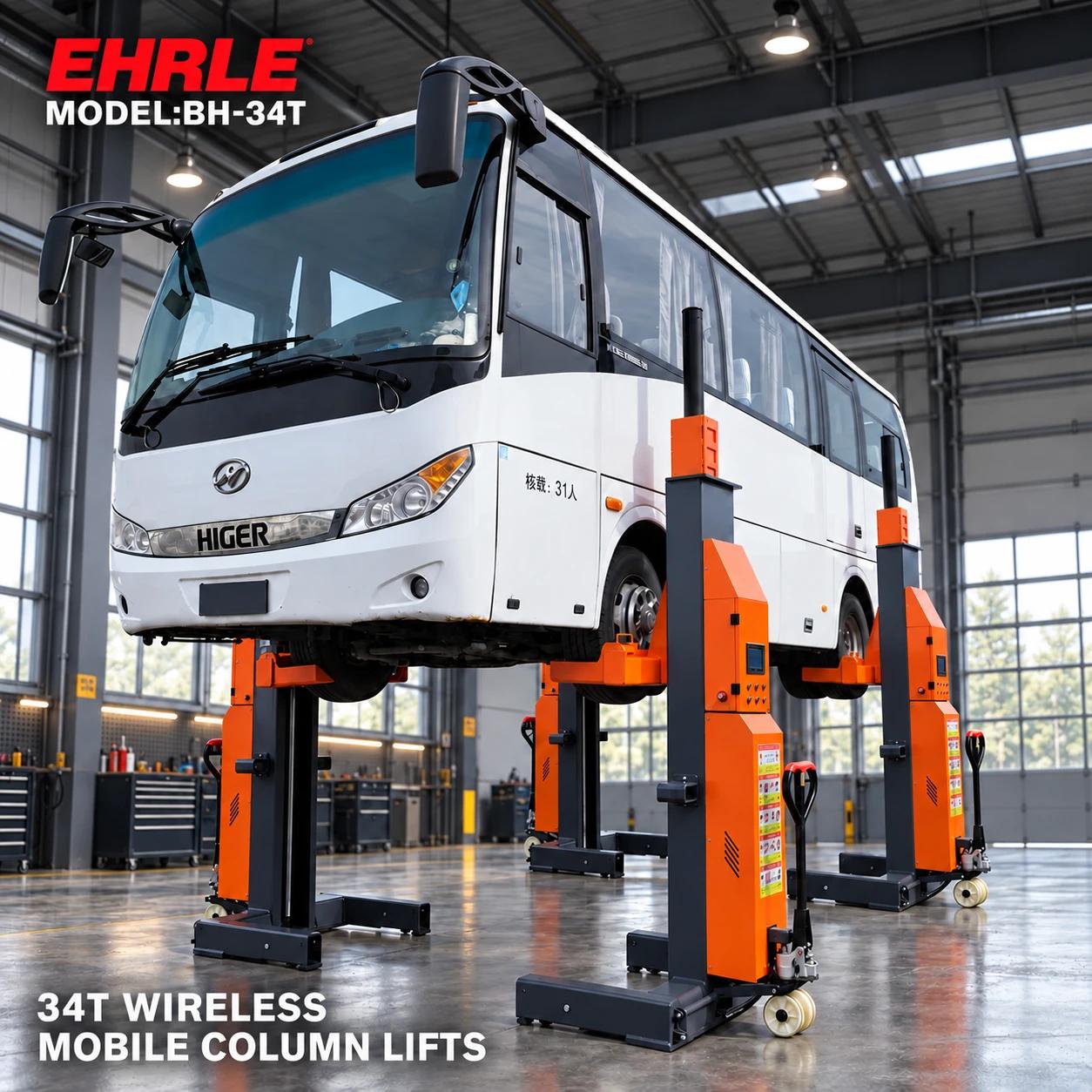
Product scene illustration. Wheel removal needs a separate manufacturer-approved support and unloading procedure.
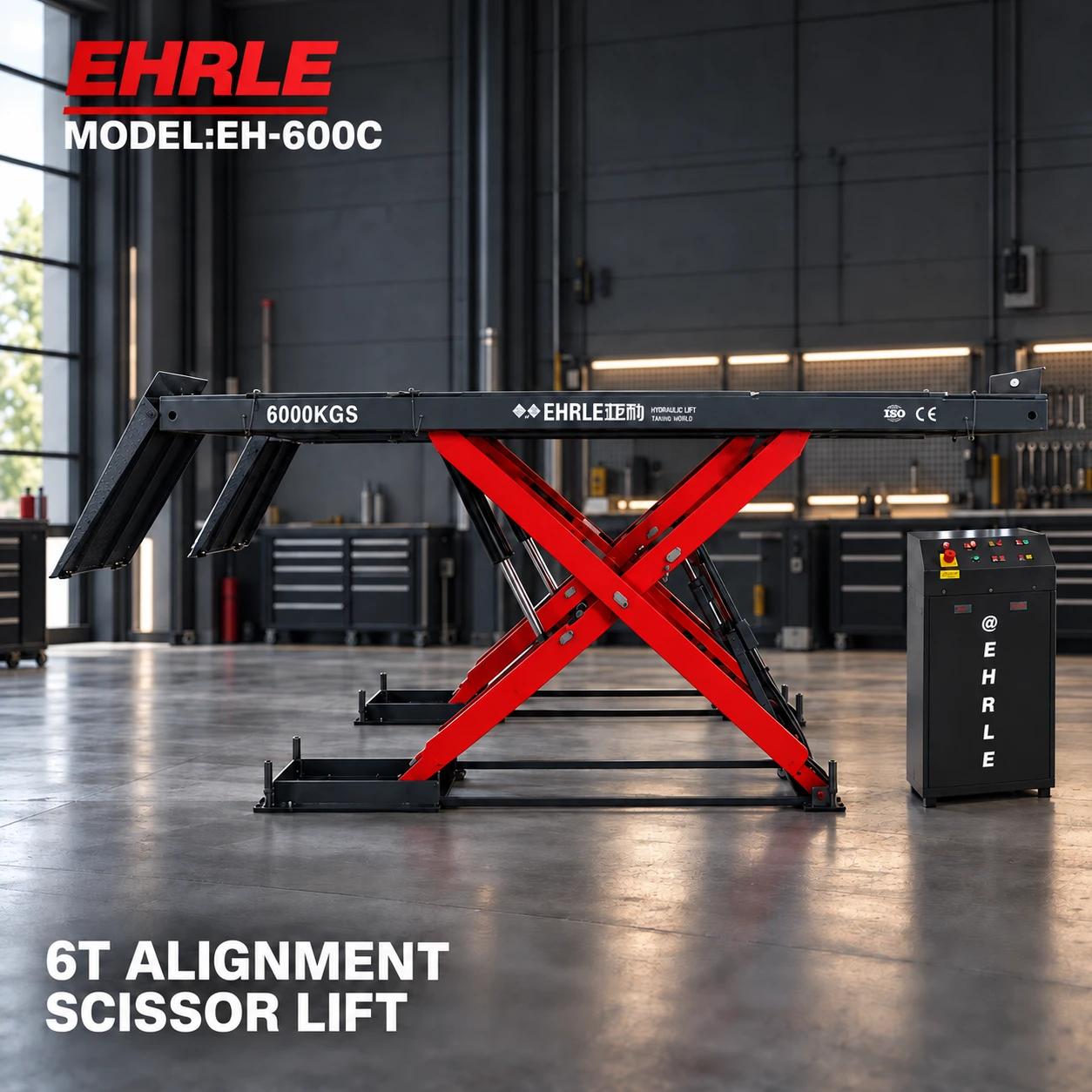
Product scene illustration. The 3,000 kg secondary trolley is optional; confirm supplied equipment, adapters and task suitability separately.